Tuesday, August 23, 2011

Realms of Faerie: Mountains


Let me get this here, up front: this post will cover more than mountains. Lots more.

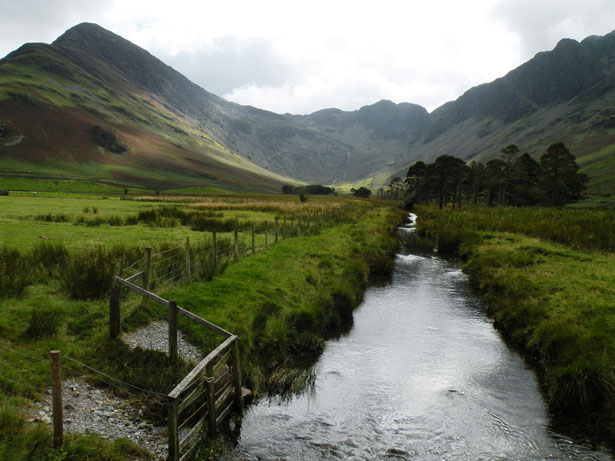
Because, you see, mountains are made of stones--big chunks of solid minerals, hard and gritty or chalky and light. And these stones, indeed, compose the very foundation of any earth, fantasy or otherwise. So, clearly, mountains and the stones beneath them are pretty important in fashioning your fantasy world!

Let's begin with the Christian point of view. Psalm 18:2 says, "The LORD is my rock, my fortress, and my deliverer; my God is my rock, in whom I take refuge. He is my shield and the horn of my salvation, my stronghold." {NIV}

That's pretty straightforward, right? When we think of rocks, in their firmness and solidity, we are to be reminded of God, who is our perfect shield and solid fortress. So when we create our own rocks and stones as the foundation of our fantasy world, we have a heavy task to shoulder and a weighty responsibility to carry in representing the full truth of God's nature.

Who would've thought that even the lowly pebble had a message of God's grace embedded in its atoms?

Now for writing rocks and mountains.

The main thing to keep in mind, as with all fantasy writing, is to be original. How to do that, though? Sometimes the mind just seems inadequate for imagination!

As usual, I've written a few launching pads for your thoughts on rock and stone. If you'd like some additional inspiration, I would highly recommend reading Shannon Hale's young adult novel, Princess Academy. An extremely key aspect of that book is the particular kind of stone, linder, harvested in a local quarry, which enables a rural mountain community to face and overcome dangers of many sorts. Very instructive to those interested in writing rocks.

1. Composition: smooth and shiny or rough and gritty? Light and full of air or heavy and dense? Knotted and eroded or in some pearl-like "perfect" state? Chalky and powdery or smooth and glass-like?

2. Color: ah, joy! I love color! Unusual colors give a huge zing of life and energy to any sagging fantasy world. For a hint of what I mean, take a look at the rocks of our own world--those gorgeous reddish canyon rocks of Colorado's Garden of the Gods, or the clear crystals buried in underground caverns beneath our feet, and even jemstones like turquoise, emerald, ruby. The color or colorless possibilities are, as always, limitless.

3. Unique features: This includes the mountain ranges in your realm, as well as any unusual peaks that have their own name and history. Also included are any strange rock features anywhere in your land--fabulous undersea caves filled with salt crystals or volcanic arches made of cooled lava and the like. Dream big, expand your world's history, and create! But be warned: this is no small task. Do not rush the geography of your world.

Well, that's it for now! Enjoy writing!


Saturday, August 20, 2011

Realms of Faerie: Forests

{I apologize for the delay in getting this post out--I'm sure you know how summers can be, especially with those nagging fantasy projects you've been wanting to accomplish}


This is the second post in our series on realms of Faerie. Last time we talked about castles; now, we're moving into the realm of nature to cover forests.

Forests of all shapes and sizes abound in every proper fantastic world. The Enchanted Forest of Patricia C. Wrede's Enchanted Forest Chronicles is a prime example of such a forest, brimming with worthy woodkeeper's sons, damsels in distress, dragons, and magical enchantments of every sort. You know the type, I'm sure.

As far as faith goes, forests do not typically pose a problem to Christianity. After all, God was the One who created forests in the first place! In fact, we can even say that by creating forests in our imagination, we are reflecting the nature of our Creator God. Pretty neat!

But there's some bad news too. Unfortunately, in fantasy these days, forests often go through the same uses over and over again: a place of refuge for bandits or the big bad wolf, somewhere to gather herbs of healing, a dangerous area through which the long-suffering hero must travel, the ideal location for a poor widow's cottage, and so on.

And, if that weren't bad enough, these forests often consist--dare I say--of trees just like the ones around us {maples, birches, aspen, and so on}, and, further, forest animals suspiciously like the ones we see every day {do I need to mention the word "deer"?}.

Clearly, we need to up the ante on our forest originality!

Need a gentle nudge to get your little gray cells thinking in the right direction? Here are a few things to think of when crafting fantasy forests.

1. Color: Maybe color doesn't matter in the least in your story. So what? Go ahead, make your forest an unusual shade of titanium gray, dove white, or perfume pink, and I guarantee it'll make you think a little deeper about the structure, biology, and cosmology of your fantasy universe as a whole! Just compare it to our forests in autumn or spring--and, really, who needs a boring old green forest?

2. Type of tree: The first thought that comes to mind when I hear the word "tree" is a tall object with branches and leaves. But not necessarily! What if you had a forest made of poles, like a bamboo forest? Or if you had a forest made of gigantic mushrooms? Or a forest of large, fluffy objects that grow on stems {think Dr. Seuss}? The possibilities are literally endless!

3. Use of forest: Honesty, you do not need a forest to conceal your poor dear kidnapped princess. There are so many more clever alternatives involving toothpicks and particularly skilled swordsmen--not to mention imagination. But, let's say you do need that forest for the princess. What if, at the same time, you made the forest come to life, as with the Ents and trees in Tolkien's Lord of the Rings? Then your princess not only faces the task of getting away from her captors, but also somehow befriending or battling the trees to get out. Much more original, aye?

I certainly hope that those are enough questions to get you thinking the best ways to combat boring old forests. I'll also post some public domain pictures below for further inspiration :)


Friday, June 24, 2011

Realms of Faerie: Castles


On to the next series! And, to begin our perilous journey through the strange and fantastic realms of fantasy, is...castles galore!

Yes, that's right--castles. Strictly speaking, a castle can be two things {sometimes both}: One, a large building or group of buildings fortified against attack with thick walls, battlements, towers, and, in many cases, a moat; or, two, a magnificent and imposing mansion, especially one that is the home or former home of a member of the nobility.

So, why do castles pop up so often in fantasy? Well, basically, fantasy looks to the past--especially back to the Middle Ages, Medieval times, the era of valiant knights, fair ladies, and, of course, magnificent castles. Not that it has to; in fact, if you've got a fabulous idea for a modern fantasy, go with it! {Less competition, y'know.} But, back to castles, since royals crop up a lot too in fantasy, as I've mentioned in another post {here}, they need a place to sleep. So--voila--castles!

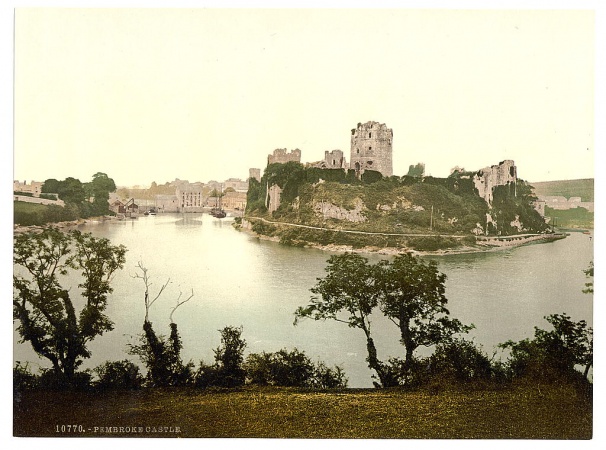
Now there aren't too many ties between Christianity and castles {that is, there could be a lot, but I'm not quite energetic enough to tackle them in the present post!}. So, I'll just post some pictures here that will hopefully leave you gasping in awe, full to the brim of inspiration for that evil tower you've been envisioning for weeks.

And, without further ado, enjoy!


Sunday, June 12, 2011

What Next?

We've been through a bunch of beings of Faerie - from royalty to guardians, from dragons to elves, and a few far-off and mysterious things between. Obviously, I can't possibly post on every single being in Faerie--it would take all my lifetime, and I probably wouldn't reach the end even then! So, for now, this first series on beings of Faerie is at an end. {Still, be on the lookout for a continuation in the future!}

Now, what's coming up next?

I'll be writing a short series on realms of Faerie. I will post about castles, landscape, and a few other topics related to fantastic places. Along with writing about these "realms" and connecting them with a Biblical worldview, I'll also post some inspirational pictures for you to use in your own dreaming, imagining, and writing. So enjoy!

May your pencils stay sharp!

Sunday, June 5, 2011

Beings of Faerie: Guardians

Guardian: a person who protects or defends someone or something; defender; protector {represented as knights, Rangers, and other human guardians}

Public Domain
Guardians & Faith:


Guardians are pretty straightforwards fellows, altogether. Defending and protecting other people, things, or realms against evil has been the task of brave men and women since Creation.

However, that doesn't mean we shouldn't take a look at what the Bible says. So here are some key verses that deal with protection or guardianship:

Psalm 68:5, "Father of the fatherless and protector of widows is God in his holy habitation."

Isaiah 31:5, "Like birds hovering, so the LORD of hosts will protect Jerusalem; He will protect and deliver it; He will spare and rescue it."

Proverbs 31:9, "Open your mouth, judge righteously, defend the rights of the poor and needy."

Nehemiah 4:8-9, "And they all plotted together to come and fight against Jerusalem and to cause confusion in it. And we prayed to our God and set a guard as a protection against them day and night."

Again, fairly straightforward, but interesting nonetheless. Now on to creating!

Public Domain
On Writing Guardians:

It's pretty easy to throw in a knight-in-shining-armor here, a ranger-hooded-and-cloaked there, right? Wrong! Your guardians should be a fundamental thread in the fabric of your story and your world - or else nonexistent. That way, each piece of the story will add something valuable and crucial to the framework and structure of your world.

Some other considerations:

1. What do they guard, defend, or protect? Are they like Tolkien's Rangers of the North, the Dunedain, who kept out evil creatures from the more civilized lands? Or do they share similarities to either the knights or the rangers from the Ranger's Apprentice series by John Flanagan? Perhaps they might guard a sacred object or natural wonder. It's yours to decide!

2. Structure of authority ~ how do they fit into the governmental structure of your world? Are they the "policemen" for a king? Also, what is their internal organization - each man for his own, or a council of leaders that directs the whole group of guardians, or something else entirely?

3. Quirks ~ like many of the beings in Faerie, guardians leave ample room for your own creativity. So don't be afraid to be different! Make your rangers have an awesome tattoo, or give each of them a pet hawk. Imagine and dream!

Of course, as always, there's so much more to explore - but that's for you to do!

John Howe: Weathertop on the Horizon

Saturday, May 28, 2011

Beings of Faerie: Royalty

Royalty: people of royal blood and monarchial lineage

Charles VII of France {Public Domain}


Royalty & Faith:

Where do royalty fit into the grand and glorious realm of Faerie? Well, fantasy as a genre usually leans towards the medieval, when monarchs reigned supreme over the people. Often, these monarchs claimed authority and power directly from God and acted as His law enforcement throughout their kingdoms.


Monarchs could be actual authorities, or they might be ceremonial figures whose main point was to impress the people and encourage them or direct them when called upon by the real authority {for example, a military hero or regent}.


The Bible says many things about kings and monarchy. Here are a few pertinent quotes:


Deuteronomy 17:14-15a, "[Laws Concerning Israel's Kings] When you come to the land that the LORD your God is giving you, and you possess it and dwell in it and then say, 'I will set a king over me, like all the nations that are around me,' you may indeed set a king over you whom the LORD your God will choose."


Deuteronomy 17:18-20, "And when he sits on the throne of his kingdom, he shall write for himself in a book a copy of this law, approved by the Levitical priests. And it shall be with him, and he shall read in it all the days of his life, that he may learn to fear the LORD his God by keeping all the words of this law and these statutes, and doing them, that his heart may not be lifted up above his brothers, and that he may not turn aside from the commandment, either to the right hand or to the left, so that he may continue long in his kingdom, he and his children, in Israel."


1 Samuel 8:11-18, "These will be the ways of the king who will reign over you: he will take your sons...and he will appoint for himself commanders of thousands and commanders of fifties.... He will take your daughters.... He will take the tenth of your grain.... He will take your male servants and female servants.... He will take the tenth of your flocks, and you shall be his slaves. And in that day you will cry out because of your king, whom you have chosen for yourselves, but the LORD will not answer you in that day."


1 Samuel 12:13, "And now behold the king whom you have chosen, for whom you have asked; behold, the LORD has set a king over you."


Psalm 10:16a, "The LORD is king forever and ever."


Psalm 22:28, "For kingship belongs to the LORD, and He rules over all the nations."


Very interesting passages, aye? If you're writing royalty, then it would definitely be worth your while to do a more thorough search on "kings" in the Bible. And even if you decide not to incorporate what you learn, or decide to modify a Biblical kingship - for, after all, God gave us the gift of imagination - then hopefully you will have been enriched anyway by this research!


Casper David Friedrich {Public Domain}
Writing Royalty:


I won't embarrass you by trying to explain how one writes royalty. I'm sure you're well aware that most royals are mere humans like ourselves, merely graced by God with higher authority and power. So there you go.


Just one note, though, before you leave - royalty should not be add-ons to your story. If the framework of government in your realm incorporates royalty, then by all means go ahead! However, if you've already got a functioning government that "works," keep it. You can always rewrite later to include them!


Queen Victoria {Public Domain}


Tuesday, May 24, 2011

Beings of Faerie: Horse-Creatures

Horse: A solid-hoofed plant-eating domesticated mammal with a flowing mane and tail, used for riding, racing, and to carry and pull loads

Centaur: A creature with the head, arms, and torso of a human and the body and legs of a horse

Pegasus {winged horse}: a horse with wings, originally from Greek legend

Unicorn: A mythical creature resembling a horse, with a single horn in the center of its forehead; often symbolic of chastity or purity

Public Domain
Horse-Creatures & Faith:

There's a lot of ground to cover, isn't there? Let's take a quick look at each creature from the standpoint of faith.

Horses, the most "earthly" of these creatures, pose no problems with a Biblical worldview. They were created by God on day 6 of creation, along with the rest of land-dwelling creatures. They're animals, and thus "lower" than human beings and incapable of spiritual intelligence.

Centaurs are slightly more troublesome. Throughout Greek mythology, they were a nasty race prone to wildness and barbaric manners. Irredeemable? Just ask C.S. Lewis, who incorporated them in The Chronicles of Narnia. According to Wikipedia, "Lewis depicted centaurs as the wisest and noblest of creatures. They are gifted at stargazing, prophecy, healing, and warfare, a fierce and valiant race always faithful to the High King Aslan the Lion. Lewis generally uses the species to inspire awe in his readers." Clearly reconcilable.

Next we have Pegasus and Pegasi, or winged horses in general. Like centaurs, Pegasi originate in Greek myth {Pegasus sprang from the blood of Medusa}. However, winged horses aren't inherently "tainted" by this pagan origin; rather, it leaves more room for deciding on an alternate imaginative beginning. It's quite similar to what Lewis did with centaurs.

Last, but certainly not least, is the unicorn. Here's a fascinating bit of trivia about unicorns: did you know the King James Bible mentions unicorns? In later translations, "unicorn" was changed to "wild ox," but here's an original verse: Numbers 23:22 says, "God brought them out of Egypt; he hath as it were the strength of a unicorn." Amazing! Also, the unicorn is usually held to be symbolic of purity and grace. This really is a lovely creature to capture in your writing!


{Public Domain}

{Public Domain}

Domenico Zampeiri {Public Domain}

On Writing Horse-Creatures:

Horse-creatures are infinitely useful to any author, whether as a mode of transport or as their own race of beings. Here are some general considerations for each species.

A. Horses
~ Uses: transportation, warfare, or racing and entertainment?

~ Sentience: Can horses communicate {as with Chronicles of Narnia}, or are they more like simple pets?

~ Similarities and differences from earth-horses: Make your horses recognizable, yet show that they're special creatures in a fantasy realm. For example, write all horses with gold eyes!


B. Centaurs
~ Origin: Be creative in crafting a unique origin for these special two-race creatures!

~ Culture: What activities do centaurs excel in? Are they artistic or technological, warrior or scribe?

~ Quirks: {Always the most fun part of creating creatures} Do they carry four swords, as with the Narnia movies? Perhaps they can't run far without a sip of electric-blue nectar?

~ Interaction with other races: Aloof and distant? Or perhaps engaged in a relationship with only a single human? Friendly? Silly?


C. Pegasi
~ Origin: As with centaurs, craft your own! For example, in Robin McKinley's Pegasus, the pegasi were the original inhabitants of the land before humans came.

~ Culture: Again, like centaurs, what is their cultural legacy? Are they composers of songs and legends of pegasi heroes? Incredible weavers, as with McKinley's book? This would also include their structure of government, and any particular rituals or customs they have.

~ Quirks: A funny way of wheezing when they talk? Chattering teeth when they're hot? Can't fly in daylight? It's up to you!

~ Interaction with other races: In McKinley's Pegasus, the pegasi were a distant race who couldn't communicate with humans, yet were "bonded" to members of the royal family. They communicated via sign language and "interpreters." What is the best mode of interaction for your realm?


D. Unicorns
~ Origin: You're in luck - the origin of unicorns can be anything! No prior attachments to sever. Just be sure to incorporate them smoothly into the tapestry of your world!

~ Intelligence: More intelligent than humans, or less?

~ Role in society: Are they wild animals, or organized into a governmental structure? Are they closely knit as a group, or tied to particular groups of humans, or something else entirely?

~ Quirks: Do they grant wishes with a hair plucked from their tail? Can only the pure in heart ride them?


And there you have it - your personal guide to exploring the creation of horse-creatures. Enjoy writing!
{Public Domain}