Showing posts with label Christianity. Show all posts

Monday, November 17, 2014

Guest Post: Five Things I've Learned from a Hobbit

Today on the blog I have the delight of welcoming a fellow author, Jill Richardson, who will be encouraging us with some meditations on Hobbits and faith. You should definitely check out her book, Hobbits, You, and the Spiritual World of Middle-Earth. It's a fascinating devotional and study book that's grounded in the wonderful literature of the Hobbit and the even more wonderful Scriptures. So, without further ado, here is her blog post!


Bilbo's Journey and Me—Five Things I've Learned from a Hobbit


Have you enjoyed the last two winters of Bilbo Baggins' adventures on the big screen? I definitely have. (Although I've had to keep repeating to myself—This is not the book. This is not the book. Because it isn't, for those of us who love the book. Still . . . it's fun.) I even made last year my first ever midnight showing. (That was rough. I'm a little older than . . . many of you.)

Six movies and thirteen years later, Bilbo Baggins' cinematic sage is almost over. It started in 2001 with his birthday party (Fellowship of the Ring) and ends this winter, technically sixty years before that party. Yeah, a little timey-wimey thing going on there; it's complicated.

My love affair with all things Tolkien started late. It's not like my brother didn't try. He told me Lord of the Rings and Tolkien's other works were the best books ever written. He even gave them to me. But I never read them.

Then my husband started reading the books to our girls in preparation for seeing the movie, thirteen years ago. I went, and I sat in that dark theater in Bozeman, Montana, expecting not to like the action adventure film.

I fell irrevocably in love. Went home. Read all the books. Started studying them, and finally wrote a book about them. My fascination with character study and these particularly amazing characters flooded together in that book that combined Tolkien and Scripture (and trademark sarcasm).

So I thought perhaps today we could look at one of those characters. Specifically, the main one. You don't name an entire book (and three movies) The Hobbit if that hobbit is not somewhat important.

What makes Bilbo such a popular hero? What does he teach us about adventures, and heroism, and life?

1—Don't leave the path.

Gandalf's last words to the hobbit and dwarves before they go into the ominous forest are, “DON'T LEAVE THE PATH!” You know what's going to happen right there.

Directions we receive when life is all sunshine and rainbows are easy to remember. However, spend a while in the dark--lost, surrounded by frightening noises, and uncertain you'll ever find your way out--and . . . those simple instructions seem long ago and far away.

Maybe God didn't mean exactly what He said. Maybe I can take a short cut. I'll still end up in the right place, but I'll find an easier way. (Sounds just a little like Satan in the Garden of Eden hissing, “Did God really say that? Are you sure that's what he meant?”)

CS Lewis said that the devil was never in more danger than when a human could no longer feel God's presence but obeyed him anyway. When God seems silent, I try to remember Bilbo's insistence they remember what they last heard. Stay on the path. Even when scared and lost.

2—Never laugh at a live dragon.

Bilbo truly enjoyed matching wits with Smaug. He'd shown his mental quickness already with Gollum. Now, in the cave chatting with a dragon, it was taking all his abilities, and he got a little carried away. That intellectual adversary was a dragon. He didn't need a lot of incentive to create hobbit flambe. Bilbo was so into his own brilliance there for a while that he forgot he was dealing with something way beyond him. He started to underestimate the danger and overestimate his own capacity. 

I've done that. Getting so impressed with my own intelligence, or ability to handle temptation, or good judgment, that I start to think I can handle whatever the situation is. So sure of myself that I forget this battle is way beyond me. I forget that Jesus said, “Apart from me you can do nothing.”

3—Be a Problem Solver.

Barrel scene—best ever. OK, so it wasn't the easiest route to freedom, but while the dwarves sat around complaining about how nothing was going to work, Bilbo came up with an idea that might.

There are people who let life happen to them, and there are people who take charge of life. Bilbo progresses throughout the book from being the first kind of person to the second. Life is full of obstacles to getting where you're supposed to be. A victim of life  wonders why nothing has worked out for him; a Bilbo looks for a way to deal with the things that aren't working. You may get wet, but you'll get where you wanted to be.

4—Trust the One Who Chose You.

Bilbo does not think he is a burglar. Nor a warrior, adventurer, or dragon slayer. He doesn't even think he can skip breakfast without serious consequences. Neither does anyone else--and they are right. He isn't.

Bilbo continues the journey because he was given a job and he is committed to getting it done. Even when no one believes in him. Along the way, while he keeps trusting that call, he finds his courage. He becomes the hero in a way that only he could.

There's a reason I sign my book with the verses: “Remember, dear brothers and sisters, that few of you were wise in the world’s eyes or powerful or wealthy when God called you. Instead, God chose things the world considers foolish in order to shame those who think they are wise. And he chose things that are powerless to shame those who are powerful.” (1 Corinthians 1.26-27)

When God calls, he knows how capable or incapable I am. He knows where I'll need help. What he wants is my willingness to trust and keep going.

5—Be the Boss of Your Fears.

I love the paragraph in the book where it says that Bilbo fought his greatest battle not when he saw the dragon but in the tunnel beforehand. His greatest struggle was with his fear, not with the creature. Once he defeated the urge to turn back, he had already won.

Sometimes the biggest thing we fear is not the dragon but our own reaction to the dragon.

We're more afraid of how terrible we'll feel running back down the tunnel. We don't like feeling like failures. When Bilbo takes charge of his fear and makes himself keep waking, he shows us all how to face the things that frighten us.

And One Bonus Lesson—Stay away from large spiders. Really, why should anyone have to tell you this? It should be obvious.


Jill's somewhat unnatural love for hobbits and elves comes from her time as a literature teacher and as a lifelong reader of great stories. She also loves an epic challenge and a chance for grace wherever they exist. Jill is pastor of Discipleship at Resolution Church in Illinois. She is the author of Hobbits, You, and the Spiritual World.

Contact Jill by email at jills-books@comcast.net, check out her website, like her Facebook page, read her blog, follow her twitter… Yes, there are many ways of contacting her! Choose your favorite!

Saturday, November 8, 2014

Advent is Coming

Advent is coming soon, and I've been reading a beautiful book called The Gospel of Christmas, by Patty Kirk.

Now, the book doesn't talk about fairies, monsters, dragons, or princes in disguise, but it does tell an even grander story: it describes the wonderful mystery of Christ's birth. By reading this book, I've seen the Advent of Christ in a whole new light.

For example, here's one quote that illustrates beautifully one small part of what I've learned from her book:
I got so caught up in the details of our shared existence--the schedule, the car, the children, the 10:50 church service--that I no longer paid much attention to the real events of my life, no longer pondered their meaning or treasured them up in my heart.
Did Mary feel the same way sometimes? I wonder now. Did she long for a quiet place in the tumult of giving birth and fleeing to Egypt and finding a cheap place to live and making friends among strangers and wanting to be home? … 
As she was raising up Jesus and soon his brothers and sisters, as she reviewed their activities in her head so she wouldn't forget one, as she washed clothes with the other women of the town and helped organize a niece's wedding, did she, like me, long to escape the commotion, the words spoken and not spoken, the noise and responsibility and turmoil of belonging, the "with-ness" of life, and just be alone? 
As you all head into that busy, noisy advent season, I hope you can find moments to treasure up the meaning of life in your heart, as Mary did. Take a few moments to be alone, in silence. Journal and reflect on God and what He has done in your writing and your life this year.

Treasure the stillness, the "Silent Night," the "Stille Nacht," whenever God gives you the chance.


What are your thoughts as we approach the season of Advent? Have you made time for stillness in your life and in your writing?

Friday, July 4, 2014

An Update

It's been a little less than a year since I last posted on this blog. Looking back, I find it rather ironic that the last post I wrote was about "when life gets in the way." Seems my life has been getting in the way of blogging quite a lot this past year.

To be honest, I've been afraid to start blogging again. I feel like I have nothing left to say. My writing projects haven't been focused on fantasy any more, and neither has my reading, so I'm afraid that if I blog about fantasy I'm betraying myself and my readers. I'm left wondering if this whole idea of "Faeire & Faith" is really what I want to be doing.

To put it another way, I am full of doubts about my writing, my self, and the place that Christian fantasy has in my life.

But let's look at it in another way: when are we not full of doubts? When can we ever say with perfect confidence, "This is my ultimate purpose in life and the reason I was placed on this earth; I will not depart from it"?

Life is about so much more than simple certainties. Life is composed of doubts strung together into a narrow, tenuous lifeline clinging to our one anchor: the Cross.


Whew. That felt good to say!

Let me give you a quick update on my current writing and reading projects.

I've written about 60k of a fantasy story about time travel, Vikings, and a magical Ireland. Unfortunately, what I've written so far is about a third to half of the whole story, at least in my imagination. Plus, I keep getting waylaid by fears that my story idea is ridiculous, cliché, unfaithful to Ireland... You know the feeling. More doubts.

So then I started another story, roughly-maybe fantasy, and abandoned it after only about 20k. Don't worry, it wasn't worth saving. I just wrote it to get out the frustrations about story #1 with a new story.

Then I got sick of fantasy, and I decided to write a contemporary romance story set in NYC about a twentysomething writer who gets fired from her job for criticizing her boss and the company. At the threat of a lawsuit, she's forced to do something rather desperate. Honestly, it's just fluff, but it's so entertaining to write that I can't really force myself to give it up! I think I have about 40k written right now.

As far as reading goes...I must admit, I've been sinking deeper and deeper into the world of Jane Austen. Did you know that there are fanfiction and variations for every possible minor Austen character, from Elizabeth Elliot in Persuasion to Charlotte Collins from Pride & Prejudice? Also, Georgette Heyer, another Regency writer, is an amazing author. Hilarious and so subtle! I have to say, some of these stories are so engrossing that it's hard to think about anything other than Regency dresses and chaperones and carriages and...  You get the picture.


So there's an update on my life. What about you? What have you been writing or reading? Has anyone published any books or stories? Also, has anyone struggled with any of these doubts?


Image courtesy of Flickr.com Creative Commons. "The Path" by GabPRR.

<script async src="//pagead2.googlesyndication.com/pagead/js/adsbygoogle.js"></script>
<!-- siennanorth_sidebar-right-1_AdSense1_160x600_as -->
<ins class="adsbygoogle"
     style="display:inline-block;width:160px;height:600px"
     data-ad-client="ca-pub-7142896568276191"
     data-ad-slot="1405513669"></ins>
<script>
(adsbygoogle = window.adsbygoogle || []).push({});
</script>

Sunday, June 2, 2013

Creating Fantasy Languages


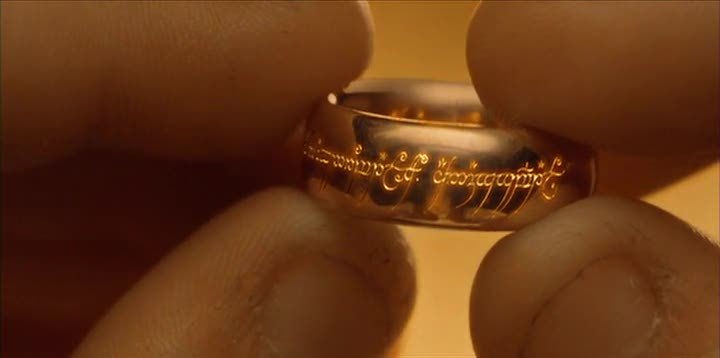
One of the most interesting aspects of fantasy works is the fact that they take place in worlds of their own, with the potential for entirely new life-forms, cultures, and languages. A few fantasy authors have capitalized on this unique opportunity by going so far as to create their own language(s) to populate their fantasy world. Of course, J.R.R. Tolkien stands as an eminent example of such a practice.

In today’s blog post, I’d like to examine first of all whether it’s worthwhile to create a language/languages for your world, and second of all provide you with some resources in case you are interested in creating languages. So, without further ado, let’s begin.

Pros:
  • Languages provide depth: There’s nothing that proclaims the hard work and seriousness of your story than a language. Adding a unique fantasy language adds an immediate dose of credibility to your story that your readers may enjoy.
  • Languages add believability to characters and settings: Languages can be invaluable tools for developing various unique civilizations and cultures in your story. Also, individual characters may be better described and recognized based on the language(s) that they speak.
  • Languages can be fun to create: This one’s pretty self-explanatory—languages are a fun break from the grind of churning out a rough draft or meticulously editing your manuscript. Just don’t get so caught up in languages that you neglect the story itself!
  • Languages are important biblically: The account of the tower of Babel tells of a time in which everyone spoke one language and “nothing that they propose to do will now be impossible for them.” (Gen 11:6) Recognizing the power of language, God created different languages, causing people to be scattered and divided throughout the earth. In short, languages have power biblically. Don’t underestimate this power in your story!


Cons:
  • Languages are time-consuming to create: It takes a lot of effort and time to come up with a unique language, especially if you use a distinct alphabet. Tolkien himself began the work of creating his elvish languages in his teen years, and the project was still in progress in his forties. Be aware that this isn’t a project to take lightly!
  • Languages don’t advance the plot and rarely help to create better characters: While languages do have some role in the story as part of the setting, they are not usually instrumental to the progress of the plot itself. They also don’t usually add to the believability of characters, since other elements—such as their likes, their dislikes, and their interests—are more essential to readers’ knowledge of characters. So don’t let languages become too much of a priority.
  • Languages require explanation and can distract from the overall story: Let’s be honest here—foreign languages slow the action down. They should be used sparingly, if at all. Be sure to weigh the benefit of adding depth to the cost of slowing down the story before you insert any languages into the story!


With that analysis behind us, let me point you to some resources in case you would be interested in creating languages.

The Language Construction Kit: a very helpful resource for those trying to create an artificial language. You can use the resources in as much or as little depth as you wish.

Language Creation Society: if you’re really serious about creating a language, they have some helpful resources on their website. Be warned—it’s not for the faint of heart!

Discussion Thread on Creating Phonetic Systems: You may have heard me mention the HolyWorlds forums once or twice on this blog. That’s because they contain many, many helpful discussions on topics relevant to Christian fantasy writers—including this particular easy-to-understand guide to creating languages and phonetic systems.

Article on How Language Affects Behavior: this article by Stanford researcher Lera Boroditsky highlights examples of how the language you speak affects how you see the world and how you behave. Although it’s not directly related to creating languages, it is very fascinating to skim if you have a few minutes to spare.


And that brings us to the end of today’s post. Now it’s your turn: have you ever tried inventing a language? How did it go? Any advice on how to include languages in your fantasy story?


Friday, April 26, 2013

Review: The Circle Series

Today it's about time for another book review, and I'm particularly excited to introduce today's book (or, more properly, series). I'll be reviewing Ted Dekker's Circle Series, which many people regard as a masterpiece of Christian literature. You'll see more of my thoughts below, so without further ado, here is my review!

Title: The Circle Series (Black, Red, White, Green)
Author: Ted Dekker
Page Count: 1,553 pages total

Stars: 4 of 5
4 = well-written and a good read

Teaser: After being chased by mysterious gunmen, Thomas Hunter wakes up in an "Other Earth" that he keeps returning to every time he falls asleep. This "Other Earth" at first resembles an unfallen Eden. Soon, however, evil and sin threatened the Other Earth. Bad as this may seem, these catastrophic events in the Other Earth are eclipsed by the threat of a deadly virus about to be unleashed on our Earth. Thomas Hunter gradually becomes a leader in both worlds as he attempts to avert both impending disasters.

Age level: 14+ (mid-teens)

Violence: 3 of 5
3 = definitely some gory portions, especially in Green, but nothing beyond PG-13 material

Romance: 2 of 5
2 = love and romance are a part of the story, in a restrained and godly manner

Language: 1 of 5
1 = a few instances of slight language

Christian worldview: Dekker, as a Christian author, writes an explicitly Gospel-centered novel series along the lines of C.S. Lewis. I admit I was a bit doubtful at first as to how the Gospel would tie into the story and whether it would feel over-spiritual or too allegorical. However, I think on the whole the series managed to reveal true Christianity as it might appear in both our earth and the "Other Earth" without being too cliche or trite. As such, I believe Dekker's Circle Series is a valuable addition to Christian literature.

My personal opinion: I love being able to dig into a long and satisfying series, and Dekker's Circle Series provides exactly that, with the bonus benefit of Christian themes. I was particularly impressed with Dekker's closure of the series and how it formed a sort of circle in and of itself. (I know some others found fault with this circular ending, but I thought it was clever and it resolved my unanswered questions well.)

So then why did I give the series only 4 stars? To be honest, I wasn't always too impressed with Dekker's characters and writing style. His plot, to be sure, is excellent. However, the word choice and sentence structure was occasionally clunky and overall seemed a bit plain and simplistic. The characters, too, didn't always feel alive and real, especially the female characters. On the other hand, as I mentioned above, the plot is truly original, the settings are splendidly crafted (especially his descriptions of "paradise"!) and I loved to hate the villains.

Overall, then, the Circle Series is an impressive work that I would urge any Christian interesting in writing fantasy to read. It's enjoyable, tense, action-packed, and a fascinating glimpse into Christian redemption viewed through the lens of a fantasy world.

Now your turn: have you read the Circle Series or any other Ted Dekker books? Do you like how he incorporates his faith into his stories? Any other comments on his work?

Saturday, March 30, 2013

Slavery & Human Trafficking

A few weeks ago, I began a series on tough, ugly issues that confront our world (and fantasy stories) today. I encouraged us as fantasy writers to use our writing as a platform for change. So far, I've spoken about racism and bullying. Today, I'll continue the series with a post on the very ugly issue of slavery and human trafficking. It'll be a bit longer than usual, but please bear with me!

I. Slavery in the Bible

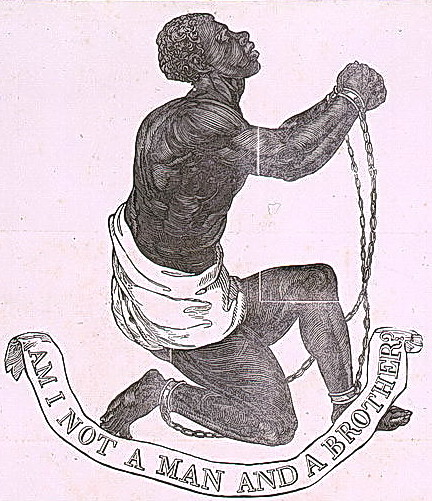
First, some Biblical background. In the Bible, slavery is mentioned multiple times, especially in the context of the enslavement of the people of Israel. The Bible addresses how horrible slavery felt to those suffering in it by saying in Exodus 2:23, "The people of Israel groaned because of their slavery and cried out for help." However, the story doesn't end there. The Bible tells us that, "Their cry for rescue from slavery came up to God. And God heard their groaning, and God remembered his covenant with Abraham, with Isaac, and with Jacob. God saw the people of Israel--and God knew." (verses 24-25) And God acted by bringing the people out of slavery.

In the New Testament, where slavery was a common practice, the church did not forbid slavery. Rather, speaking to slaves, the Bible said, "Slaves, obey your earthly masters with fear and trembling, with a sincere heart, as you would Christ...rendering service with a good will as to the Lord and not to man." (Eph. 6:5-7) To masters, Paul wrote, "Do the same to [your slaves], and stop your threatening, knowing that He who is both their Master and yours is in heaven." (verse 9) We should keep in mind, though, that slavery was legal back then and that the early church tried to obey the laws as much as possible, so long as they did not contradict God's law. More important for today may be the verse Micah 6:8, which reads, "He has told you, O man, what is good; and what does the Lord require of you but to do justice, and to love kindness, and to walk humbly with your God?" It is our calling as Christians to fight injustice--including human trafficking--in the world today.

But let's dig a little deeper into Scripture. The Bible also refers to slavery in a deeper spiritual sense. Romans 6:17-18 and 22 reads, "But thanks be to God, that you who were once slaves of sin ... and, having been set free from sin, have become slaves of righteousness. ... But now that you have been set free from sin and have become slaves of God, the fruit you get leads to sanctification and its end, eternal life." While we know that physical slavery is a horrible injustice, we must remember that as Christians there is an even greater issue: the slavery of people's hearts to sin.


II. Slavery Today

Now let's fast-forward two thousand years to slavery in today's world. For some background, I'd like to quote from the information found on International Justice Mission (IJM)'s website.

Forced labor slavery is the use of deception, threats or violence to compel someone to labor without pay or for no pay beyond the substance necessary to continue the labor. It is called by many names, including debt bondage and forced labor, and is a form of modern slavery.

Modern-day slaves face brutal conditions in rock quarries, rice mills, brick kilns, fisheries, garment factories and many other industries around the world. Victims of slavery are often deprived of the freedom of movement, unable to leave the facility where they are forced to work and unable to seek employment elsewhere. Forced laborers are also often victims of violent physical and sexual abuse.

Debt bondage is a common method used to entrap victims of slavery. In this illegal scheme, an employer offers a small loan (often as low as $25) to a laborer, with the understanding that the loan will be repaid through work at the owner’s facility. The owner then ensures this repayment is impossible by refusing to pay the employee and inflating the loan through exorbitant interest rates, false charges, and denying requests for information on the status of the loan. The laborer is forbidden to leave the work facility until the loan is “repaid” in full—despite the fact that the work already completed by the laborer should have fulfilled any obligation to the owner long ago. The employer becomes the laborer’s owner—and the loan’s conditions are often extended to relatives of the victim, including children, who are forced to work off a false and ever-growing debt.

THE FACTS
  • There are an estimated 27 million slaves in the world today—more than any other time in history.
  • Children below the age of 18 years represent an estimated 26% of all forced labor victims.
  • In a wide-reaching survey conducted by the United Nations Office on Drugs and Crime, approximately 40% of countries had not registered a single conviction against perpetrators of trafficking and slavery, which is crucial for deterrence.


III. Slavery in Fantasy

So, now that we've got that information under our belts, what can we do? Besides donating our time and resources to supporting ministries like IJM, we can harness our writing as a tool for change. How?

First and foremost, you can mention the issue of slavery or human trafficking in your story. Even just mentioning it will raise awareness of the issue. Getting the problem out in the open is crucial to eventually affecting change in our world. It doesn't have to be a major theme in your story, but knowing that the problem exists in the background could make a world of difference.

Second, if your story allows it, you can describe and show the suffering caused by slavery through the lives of one or more of your main characters. Mentioning the problem of slavery is all very well, but it's only when people realize that slavery is a problem--an unjust, painful, hideous problem--that people will start to think about what they can do to change it. As writers, one of our best tools is making something come alive to our readers. What better way to use that skill than to make the pain of slavery visible and tangible to readers, making them realize that not only slavery exists, but it must be changed!

Finally, if your story permits, you can even propose solutions to slavery through your story. Perhaps the talking eagles in your fantasy world are enslaved, but your main characters, a group of fearsome magical mice, wage a war to free the eagles. Or maybe your characters recruit freed slaves to join the fight against the evil dark lord. Maybe your main character, a former slave, returns to the place where she was kept as a slave in order to rescue her family or friends. The possibilities are as wide as your imagination; through these and other ways, you can use your story to propose solutions to slavery.

As always, do keep in mind that your story is not a sermon. Your story is life contained in words on the page. Never try to force your story into a message; instead, allow the flow of the words and the lives in the story to allow your message to shine through.


Now tell me: can you recommend any good books that tackle this problem? Have you ever tried to write about slavery? Do you have any suggestions or things to add to what I've mentioned above? Any resources about slavery in the Bible? Please comment and let us know!

(By the way, if you haven't had a chance to yet, I'd really recommend checking out IJM and getting involved in the fight against modern slavery.)


Friday, March 22, 2013

Bullying

Last week, I started a new series on tough issues in our world that we as fantasy writers can--even should--confront in our fantasy stories. If you missed out on my post last week, I highly suggest that you read it here. In today's post, I'll be talking about another extremely serious issue: bullying.

Most of us have had experiences with bullying before, especially as children. Now a few points, first, about bullies. According to many studies, bullies are often insecure people who tear others down in order to make themselves feel better. Bullies are not automatically "evil." Rather, they are often motivated by envy or resentment and may think that bullying is the only way they are esteemed, valued, or noticed. In terms of personality types, bullies are usually authoritarian/dominant personalities that enjoy controlling others, especially those against whom they are prejudiced.

With that information under our belts, let's turn to bullying itself. Bullying refers to some form of coercion or belittlement, whether emotional, verbal, or physical. Bullying often happens in the presence of a crowd of uninvolved bystanders, which adds to the victim's sense of humiliation. Bullying involves hurting someone through some sort of abusive language or behavior, usually intentionally. In some instances, casual or flippant words may have the same effect as bullying, even if they were not intended spitefully. Some common forms of bullying are name-calling, exclusion from events, verbal or written abuse, and physical violence.

Those who are victims of bullying often suffer the effects of bullying all their life. They typically feel belittled, and sometimes take that out on others by becoming aggressive or bullying themselves. Victims often feel lonely, depressed, and suffer from very low self-esteem. If you have had any experiences being bullied, you will remember the feeling of humiliation and misery as a result. It should come as no surprise, then, that those who are bullied also suffer from increased risk of suicide.

Bullying is a huge issue in our world, and can be found in as many different environments as there are people: school, the workplace, clubs and activities, on the Internet, and more.

Now, how can we translate this issue to our own fantasy worlds? The opportunities are nearly endless. Even fantasy races can participate in bullying, whether as bullies, bystanders, or victims. The psychological consequences of being bullied can add layers of meaning to certain characters in your story. You could include bullying as a backstory for a character, or you could make a character who has to stand up to bullying over the course of your novel.

One thing that I'd like to encourage here is that we, both as people and as writers, should have compassion on everyone involved in bullying. Of course we should condemn bullying wholeheartedly. However, we can also recognize that bullies and bystanders might sometimes deserve some compassion because of the things that are out of control in their lives (although that's not to say we should support their responses). Keep in mind the fact that everyone is hurt by bullying. Look for ways to translate bullying in your story into more complex situations with the potential for redemption.

Let me know what you think. Have you ever written a story in which someone is bullied? Do any of your "bad guys" show signs of being bullies? Have you read stories that dealt with this issue? (Note: If you're interested in finding out more information about bullying, I'd start with Wikipedia's overview here and the US government's stop bullying site here.)


Sunday, March 17, 2013

Racism

In these next few blog posts, I'd like to focus on some deeper, darker issues that we as fantasy writers are in a perfect position to tackle. For today, we'll be talking about racism.

First off, why should we even mention ugly issues like racism in a fantasy story? Isn't fantasy all about escaping the dark realities of this world and immersing readers in a world full of fairies and rainbows and light? As anyone who has read fantasy will tell you, no, rainbow-fairies and escapism is not what fantasy is all about.

In fact, I believe that fantasy is a medium that is excellent for conveying even the darkest truths about this world. You see, fantasy is like the reflection in a pond on a crisp autumn morning. The real world inspires the fantasy reflections. Sometimes, though, by seeing those reflections, your readers will be able to look at the real world with a clearer eye. What fantasy gives us, then, is a change of perspective. When we finish the last page and close the book, we don't look at the world in quite the same way.

So, in essence, fantasy provides us with the chance to challenge and maybe even to change a reader's view of the world. What a task--and what an opportunity!

Now that we've dealt with the power of fantasy, let's get down to the dirty business of racism. As most people know, racism refers to judging others based only on their skin color or race. Racism can result in one race believing itself superior to others and segregating or enslaving other races.

How does racism fit into fantasy? Well, most fantasy worlds have multiple beings/species/races. For example, Lord of the Rings has a variety of sentient beings--Elves, humans, wizards, and hobbits, among others. What if hobbits suddenly decided that their height entitled them to a superiority above all the other beings in Middle-Earth? Instead of a dark lord you would have a hobbit, both terrible and beautiful and powerful and short! Or, to make the issue a bit more human, what if the men of Gondor decided that they were superior to the men of Rohan and Bree and the North, and then decided to enslave anyone other than the inhabitants of Gondor?

As you can see, there are ample opportunities for racism, segregation based on race, and racial slavery even in fantasy stories.

I suggest that you take a close look at your own story. Is there a place where your story might benefit from the tension and conflicts created by racism? Do you have multiple species or races in your story, and does each one have a separate place in society? If your fantasy world has everyone equal, then think about the history of your world. Was there a time in the past where everyone was not equal? If so, how did the present equality happen, and how could you use those lessons in your story?

All of the above is not to say that you should be preachy in your stories or start ranting about the horrors of racism. Your story, not a moral lesson, is what's important here. I do suggest, though, that you take the opportunity to use your story to reflect some of the darkness in the real world. Challenge your readers by showing them ugliness not just in fantasy but in their own lives. Give people the chance to learn and change. Whether you use racism or some other topic (maybe one that I'll be covering over the next few weeks), I hope that you use your story as an opportunity to challenge and change the world.


Saturday, December 29, 2012

Top Blog Posts of 2012

The year 2012 is almost at an end--and what a year it has been! As we think over what this year has brought us, let's also look back at some of the highlights of the blog this past year. So, without further ado, here are the top 15 blog posts of 2012! (Posts are listed in chronological order.)

The Hows and Whys of Naming God in Your Fantasy Story

The Weapons in Fantasy Series -- Swords, Bows, Armor

The Fashion in Fantasy Series -- Females, Males, Shoes

The Villain Series -- 5 Ways to Kill Your Villain, Recipe for a Dark Lord

Easter and Fantasy

The Names Series -- Names in the Bible, How to Name Your Characters

Costs and Benefits of Self-Publishing

The Colors in Fantasy Series -- Tools, Opposites

So go ahead and click those links to read any posts you missed! And if you liked other posts from the blog, be sure to comment and let me know. I look forward to an even better 2013!

Monday, December 3, 2012

Guest Post: Day of Rest & Review

I have the pleasure to announce that the Holy Worlds blog is now featuring part 1 of 2 of a series on a "day of rest and review" by yours truly. The first post is available at this link, and the second will be posted next week. Here is my introduction to the series:
In this series of blog posts, I’m going to talk about the benefits of taking one day each 6-12 months off of your work or studies to rest and review your writing. There’s a parallel for this in the business world: it’s called a “personal development review,” which is a term you might see if you brave the world of cubicles (prison cells) in the member care or human relations department of a large company. It’s not a thought that would normally cross the farthest reaches of a starving scribbler’s mind.

But maybe it should.
I think this subject is one that's largely forgotten yet incredibly important for our development both as writers and as Christians, so I hope you'll take the time to head over to Holy Worlds and check it out. Look around the blog while you're at it, too!

As a side note, you may have noticed that Faerie & Faith has been somewhat silent the past two weeks. I do believe it's becoming  an annual tradition for me to post very little in the month of November (which is the month in which writers go crazy and sit at keyboards for hours on end trying to reach 50,000 or more words before the end of the month). If you're interested in my thoughts on Nano, you can find them here. Enjoy, and be assured: I'm now back in the full swing of blogging, and plan to post all the more in December.

Wednesday, October 31, 2012

Review: Peter's Angel

Title: Peter’s Angel (first volume in the Peter’s Angel trilogy)
Author: Aubrey Hansen
Page Count: 336 pages

Stars: 4.5 of 5
4.5 = an excellent book that was gripping and enjoyable

Teaser: In the wake of a lost War for Independence, Peter Jameson, a young colonel, struggles to protect his tiny patriot state of Rhode Island from the oppression of New Britain. When New Britain invades, Peter finds himself leading his small cavalry against the massive British army. But war becomes the least of his worries when his own men kidnap him and hold him for ransom. Facing certain death, Peter is freed by a mysterious boy who vanishes without leaving his name. Peter determines to find his "angel" and reward him. But his rescuer has a secret of his own, and he will do anything to keep from being found.

That summary barely does anything to scratch the multifaceted surface of Peter's Angel, but it'll have to do for now until you read the book for yourself!

Age level: Teens and up (13+)

Violence: 2 of 5
2 = PG-level violence that's a minor theme in the book

Romance: 2 of 5
2 = romance is minor but present

Language: 0 of 5 (although language is implied in one scene)

Christian worldview: Peter’s Angel is an explicitly religious/Christian novel, which makes it particularly interesting to read and review. Altogether, I was pleasantly surprised by the subtle-yet-present thread of spiritual commentary throughout the story. It worked perfectly in light of the setting in alternate-American-colonial-times. Also, Hansen wove in discussions on courtship, swearing, and God’s role in world events in an extremely skillful way—some of the best I’ve read in Christian fiction. Peter’s Angel presents an excellent example of how to write a Christian book.

My Personal Opinion: First, a few comments about what bumped this book from 5-star status. The beginning felt a bit heavy and factual and, although interesting, it could’ve used a bit more conflict. Also, even considering that Peter’s Angel is a trilogy, the ending felt rather abrupt and made me very, very impatient for the next book.

Now for the good points. The concept itself is extremely fascinating. It’s historical fiction plus that sense of questioning and exploring reality, that sense of asking, “what if something had happened differently?” In terms of the writing, the characters were my favorite aspect of the book. Each voice was distinct and the use of details to differentiate the various characters worked well. Although the action may have been slow to start, once it did begin, there was an excellent balance of character and plot-driven conflict. The setting was well-crafted, and Hansen’s marvelous use of details made each scene spring to life before my eyes.

All in all, I’d highly recommend Peter’s Angel. If you’re at all interested in Christian fiction, I’d definitely suggest that you read Peter’s Angel, both for pleasure and to learn from a job well done!

Saturday, October 6, 2012

Review: The Silver Shawl


In today’s post, I’ll be reviewing a book, but not just any old book. Today's story is a historical mystery novella by Elisabeth Grace Foley. Why the changeup? For one thing, today is the publication of The Silver Shawl, and it’s fun to celebrate with authors as they release their new books. For another thing, I love Agatha Christie’s books—if you don’t, you need to—and The Silver Shawl was highly reminiscent of Christie’s work. Plus, it’s enjoyable and fun to read. So, with that said, let me enter full review mode.

Title: The Silver Shawl
Author: Elisabeth Grace Foley
Page Count: 45

Stars: 4 of 5
4 = well-written and a good read

Teaser: In a small town in turn-of-the-century Colorado, a young woman has disappeared from the boarding-house where she lives. Her distraught fiancé is certain that she must have been kidnapped. But the case takes a new turn when a city detective appears on the scene, looking for a woman who matches the description of the missing girl. Was Charity really kidnapped, or did she have a reason to flee? Mrs. Meade, a gentle but shrewd widow lady who lives across the hall in the boarding-house, feels that there is something wrong with the story of Charity's disappearance...but can she unravel the mystery before it is too late?

Age level: Preteens and up (10+)

Violence: 2 of 5
1 = mild injuries appropriate for all ages

Romance: 1 of 5
1 = there's a hint of romance at a PG level

Language: 0 of 5

Christian worldview: No religious concerns of note. On the positive side, Silver Shawl had a sweet and Biblical portrayal of the fiancé-fiancée relationship.

My Personal Opinion: I don’t usually read novellas, much less historical novellas, much less historical mystery novellas, so I wasn’t sure what to expect when I began Foley’s book. From the beginning, however, I was captivated by Foley’s use of details. The descriptions of characters, the settings, the small gestures—everything felt vivid and true-to-life.

In the larger, overall structure of the story, the book read a lot like a short story by Agatha Christie. Mrs. Meade wasn’t quite a Mrs. Marple, but there were certain similarities nonetheless. The mystery wasn’t obvious, either; it left me guessing for quite a long time, which is saying a lot, for me. 

My one point of criticism is that the end of the story lagged a bit. There wasn't quite enough tension to keep the story going for the last few pages. However, otherwise, the story and characters were spot-on.

So, in all, I enjoyed The Silver Shawl quite a bit. If you haven’t had the chance yet to discover this marvelous world of short historical mystery, I suggest that you start right now! And you can leave a comment, too, to celebrate a fellow-writer’s self-publication day.

Friday, September 28, 2012

Review: The Fetch


In today's post, I'll review a book I read recently called The Fetch, which has a fantastic premise about Anastasia Romanov but (in my opinion) a rather flawed execution. A word of caution: this book is the first in a proposed series. While it stands alone acceptably enough, the story is not quite complete by the end of the novel.

Title: The Fetch
Author: Laura Whitcomb
Page Count: 384 pages

Stars: 3 of 5
  • 3 = enjoyable. May have minor content issues or flaws in the writing.
Teaser: Calder is a Fetch, a “death escort” who brings the souls of the dying to a decidedly non-Christian heaven (there is no Hell, as Calder explains). After falling in love with an earthly woman, he breaks his vows as a Fetch and stays on earth to try to find her. The woman happens to be one of the Romanovs, on the way to her death on the eve of the Russian Revolution. The story “solves” the mystery of why Anastasia and Alexei’s bodies were not found with the rest of their family.

Age level: Mid-teens and up (15+)

Violence: 3 of 5
  • 3 = between PG and PG-13 violence that plays a major role in the story
Romance: 2 of 5
  • 2 = romance is minor but present (for instance, one kiss at the end of the story)
  • Note: this book is technically classified as "supernatural romance." However, I felt the romance was really a side issue and hardly came up until the very end.
Language: 1 of 5
  • 1 = replacement swear words
Christian worldview: Clearly, the idea of a Heaven without a Hell is contrary to Christianity at its heart. If everyone is saved, then how can God have any justice or integrity? To be honest, God was really brushed aside in the story as an unsolvable mystery. The book did mention a historical Flood and Tower of Babel, but its explanations were again not entirely Biblical.

My thoughts: My favorite part of this story was the incorporation of the Russian Revolution and the Romanovs. By setting it in such a specific time and place, Whitcomb managed to surpass the ordinary clichés of supernatural fantasy and add suspense in regard to how she would clear up the mystery of Anastasia. The idea of Fetches was also intriguing, although I don’t think the philosophy of them stands up at all against the Bible. Still, not a bad idea.

As far as the romance goes, even though the book is billed as “supernatural romance,” there really wasn’t any romantic interaction between the characters until nearly the very end. It almost left me wondering whether there would be any after all.

The book’s biggest weakness, in my opinion, was that it was far too long. The characters spend half of the book on a chase around the world that seems pointless, and then the ending breaks in abruptly. If instead the author had ended the story about halfway through the book, with the excitement of death and danger still in the air, I might have been a lot more satisfied.

Overall, The Fetch was an enjoyable read but not outstanding. I’d recommend it to those interested in Anastasia or in the modern genre of supernatural romance.