Showing posts with label Worldview. Show all posts

Friday, April 26, 2013

Review: The Circle Series

Today it's about time for another book review, and I'm particularly excited to introduce today's book (or, more properly, series). I'll be reviewing Ted Dekker's Circle Series, which many people regard as a masterpiece of Christian literature. You'll see more of my thoughts below, so without further ado, here is my review!

Title: The Circle Series (Black, Red, White, Green)
Author: Ted Dekker
Page Count: 1,553 pages total

Stars: 4 of 5
4 = well-written and a good read

Teaser: After being chased by mysterious gunmen, Thomas Hunter wakes up in an "Other Earth" that he keeps returning to every time he falls asleep. This "Other Earth" at first resembles an unfallen Eden. Soon, however, evil and sin threatened the Other Earth. Bad as this may seem, these catastrophic events in the Other Earth are eclipsed by the threat of a deadly virus about to be unleashed on our Earth. Thomas Hunter gradually becomes a leader in both worlds as he attempts to avert both impending disasters.

Age level: 14+ (mid-teens)

Violence: 3 of 5
3 = definitely some gory portions, especially in Green, but nothing beyond PG-13 material

Romance: 2 of 5
2 = love and romance are a part of the story, in a restrained and godly manner

Language: 1 of 5
1 = a few instances of slight language

Christian worldview: Dekker, as a Christian author, writes an explicitly Gospel-centered novel series along the lines of C.S. Lewis. I admit I was a bit doubtful at first as to how the Gospel would tie into the story and whether it would feel over-spiritual or too allegorical. However, I think on the whole the series managed to reveal true Christianity as it might appear in both our earth and the "Other Earth" without being too cliche or trite. As such, I believe Dekker's Circle Series is a valuable addition to Christian literature.

My personal opinion: I love being able to dig into a long and satisfying series, and Dekker's Circle Series provides exactly that, with the bonus benefit of Christian themes. I was particularly impressed with Dekker's closure of the series and how it formed a sort of circle in and of itself. (I know some others found fault with this circular ending, but I thought it was clever and it resolved my unanswered questions well.)

So then why did I give the series only 4 stars? To be honest, I wasn't always too impressed with Dekker's characters and writing style. His plot, to be sure, is excellent. However, the word choice and sentence structure was occasionally clunky and overall seemed a bit plain and simplistic. The characters, too, didn't always feel alive and real, especially the female characters. On the other hand, as I mentioned above, the plot is truly original, the settings are splendidly crafted (especially his descriptions of "paradise"!) and I loved to hate the villains.

Overall, then, the Circle Series is an impressive work that I would urge any Christian interesting in writing fantasy to read. It's enjoyable, tense, action-packed, and a fascinating glimpse into Christian redemption viewed through the lens of a fantasy world.

Now your turn: have you read the Circle Series or any other Ted Dekker books? Do you like how he incorporates his faith into his stories? Any other comments on his work?

Saturday, March 30, 2013

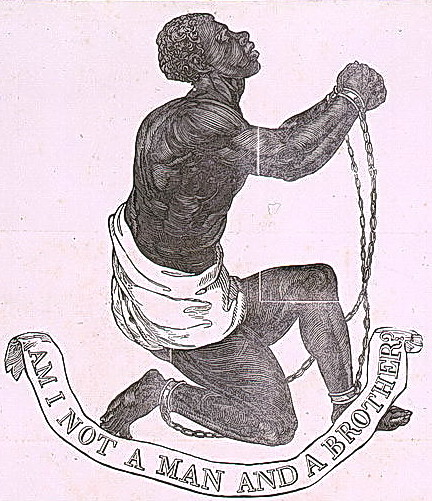
Slavery & Human Trafficking

A few weeks ago, I began a series on tough, ugly issues that confront our world (and fantasy stories) today. I encouraged us as fantasy writers to use our writing as a platform for change. So far, I've spoken about racism and bullying. Today, I'll continue the series with a post on the very ugly issue of slavery and human trafficking. It'll be a bit longer than usual, but please bear with me!

I. Slavery in the Bible

First, some Biblical background. In the Bible, slavery is mentioned multiple times, especially in the context of the enslavement of the people of Israel. The Bible addresses how horrible slavery felt to those suffering in it by saying in Exodus 2:23, "The people of Israel groaned because of their slavery and cried out for help." However, the story doesn't end there. The Bible tells us that, "Their cry for rescue from slavery came up to God. And God heard their groaning, and God remembered his covenant with Abraham, with Isaac, and with Jacob. God saw the people of Israel--and God knew." (verses 24-25) And God acted by bringing the people out of slavery.

In the New Testament, where slavery was a common practice, the church did not forbid slavery. Rather, speaking to slaves, the Bible said, "Slaves, obey your earthly masters with fear and trembling, with a sincere heart, as you would Christ...rendering service with a good will as to the Lord and not to man." (Eph. 6:5-7) To masters, Paul wrote, "Do the same to [your slaves], and stop your threatening, knowing that He who is both their Master and yours is in heaven." (verse 9) We should keep in mind, though, that slavery was legal back then and that the early church tried to obey the laws as much as possible, so long as they did not contradict God's law. More important for today may be the verse Micah 6:8, which reads, "He has told you, O man, what is good; and what does the Lord require of you but to do justice, and to love kindness, and to walk humbly with your God?" It is our calling as Christians to fight injustice--including human trafficking--in the world today.

But let's dig a little deeper into Scripture. The Bible also refers to slavery in a deeper spiritual sense. Romans 6:17-18 and 22 reads, "But thanks be to God, that you who were once slaves of sin ... and, having been set free from sin, have become slaves of righteousness. ... But now that you have been set free from sin and have become slaves of God, the fruit you get leads to sanctification and its end, eternal life." While we know that physical slavery is a horrible injustice, we must remember that as Christians there is an even greater issue: the slavery of people's hearts to sin.


II. Slavery Today

Now let's fast-forward two thousand years to slavery in today's world. For some background, I'd like to quote from the information found on International Justice Mission (IJM)'s website.

Forced labor slavery is the use of deception, threats or violence to compel someone to labor without pay or for no pay beyond the substance necessary to continue the labor. It is called by many names, including debt bondage and forced labor, and is a form of modern slavery.

Modern-day slaves face brutal conditions in rock quarries, rice mills, brick kilns, fisheries, garment factories and many other industries around the world. Victims of slavery are often deprived of the freedom of movement, unable to leave the facility where they are forced to work and unable to seek employment elsewhere. Forced laborers are also often victims of violent physical and sexual abuse.

Debt bondage is a common method used to entrap victims of slavery. In this illegal scheme, an employer offers a small loan (often as low as $25) to a laborer, with the understanding that the loan will be repaid through work at the owner’s facility. The owner then ensures this repayment is impossible by refusing to pay the employee and inflating the loan through exorbitant interest rates, false charges, and denying requests for information on the status of the loan. The laborer is forbidden to leave the work facility until the loan is “repaid” in full—despite the fact that the work already completed by the laborer should have fulfilled any obligation to the owner long ago. The employer becomes the laborer’s owner—and the loan’s conditions are often extended to relatives of the victim, including children, who are forced to work off a false and ever-growing debt.

THE FACTS
  • There are an estimated 27 million slaves in the world today—more than any other time in history.
  • Children below the age of 18 years represent an estimated 26% of all forced labor victims.
  • In a wide-reaching survey conducted by the United Nations Office on Drugs and Crime, approximately 40% of countries had not registered a single conviction against perpetrators of trafficking and slavery, which is crucial for deterrence.


III. Slavery in Fantasy

So, now that we've got that information under our belts, what can we do? Besides donating our time and resources to supporting ministries like IJM, we can harness our writing as a tool for change. How?

First and foremost, you can mention the issue of slavery or human trafficking in your story. Even just mentioning it will raise awareness of the issue. Getting the problem out in the open is crucial to eventually affecting change in our world. It doesn't have to be a major theme in your story, but knowing that the problem exists in the background could make a world of difference.

Second, if your story allows it, you can describe and show the suffering caused by slavery through the lives of one or more of your main characters. Mentioning the problem of slavery is all very well, but it's only when people realize that slavery is a problem--an unjust, painful, hideous problem--that people will start to think about what they can do to change it. As writers, one of our best tools is making something come alive to our readers. What better way to use that skill than to make the pain of slavery visible and tangible to readers, making them realize that not only slavery exists, but it must be changed!

Finally, if your story permits, you can even propose solutions to slavery through your story. Perhaps the talking eagles in your fantasy world are enslaved, but your main characters, a group of fearsome magical mice, wage a war to free the eagles. Or maybe your characters recruit freed slaves to join the fight against the evil dark lord. Maybe your main character, a former slave, returns to the place where she was kept as a slave in order to rescue her family or friends. The possibilities are as wide as your imagination; through these and other ways, you can use your story to propose solutions to slavery.

As always, do keep in mind that your story is not a sermon. Your story is life contained in words on the page. Never try to force your story into a message; instead, allow the flow of the words and the lives in the story to allow your message to shine through.


Now tell me: can you recommend any good books that tackle this problem? Have you ever tried to write about slavery? Do you have any suggestions or things to add to what I've mentioned above? Any resources about slavery in the Bible? Please comment and let us know!

(By the way, if you haven't had a chance to yet, I'd really recommend checking out IJM and getting involved in the fight against modern slavery.)


Sunday, March 17, 2013

Racism

In these next few blog posts, I'd like to focus on some deeper, darker issues that we as fantasy writers are in a perfect position to tackle. For today, we'll be talking about racism.

First off, why should we even mention ugly issues like racism in a fantasy story? Isn't fantasy all about escaping the dark realities of this world and immersing readers in a world full of fairies and rainbows and light? As anyone who has read fantasy will tell you, no, rainbow-fairies and escapism is not what fantasy is all about.

In fact, I believe that fantasy is a medium that is excellent for conveying even the darkest truths about this world. You see, fantasy is like the reflection in a pond on a crisp autumn morning. The real world inspires the fantasy reflections. Sometimes, though, by seeing those reflections, your readers will be able to look at the real world with a clearer eye. What fantasy gives us, then, is a change of perspective. When we finish the last page and close the book, we don't look at the world in quite the same way.

So, in essence, fantasy provides us with the chance to challenge and maybe even to change a reader's view of the world. What a task--and what an opportunity!

Now that we've dealt with the power of fantasy, let's get down to the dirty business of racism. As most people know, racism refers to judging others based only on their skin color or race. Racism can result in one race believing itself superior to others and segregating or enslaving other races.

How does racism fit into fantasy? Well, most fantasy worlds have multiple beings/species/races. For example, Lord of the Rings has a variety of sentient beings--Elves, humans, wizards, and hobbits, among others. What if hobbits suddenly decided that their height entitled them to a superiority above all the other beings in Middle-Earth? Instead of a dark lord you would have a hobbit, both terrible and beautiful and powerful and short! Or, to make the issue a bit more human, what if the men of Gondor decided that they were superior to the men of Rohan and Bree and the North, and then decided to enslave anyone other than the inhabitants of Gondor?

As you can see, there are ample opportunities for racism, segregation based on race, and racial slavery even in fantasy stories.

I suggest that you take a close look at your own story. Is there a place where your story might benefit from the tension and conflicts created by racism? Do you have multiple species or races in your story, and does each one have a separate place in society? If your fantasy world has everyone equal, then think about the history of your world. Was there a time in the past where everyone was not equal? If so, how did the present equality happen, and how could you use those lessons in your story?

All of the above is not to say that you should be preachy in your stories or start ranting about the horrors of racism. Your story, not a moral lesson, is what's important here. I do suggest, though, that you take the opportunity to use your story to reflect some of the darkness in the real world. Challenge your readers by showing them ugliness not just in fantasy but in their own lives. Give people the chance to learn and change. Whether you use racism or some other topic (maybe one that I'll be covering over the next few weeks), I hope that you use your story as an opportunity to challenge and change the world.


Monday, December 3, 2012

Guest Post: Day of Rest & Review

I have the pleasure to announce that the Holy Worlds blog is now featuring part 1 of 2 of a series on a "day of rest and review" by yours truly. The first post is available at this link, and the second will be posted next week. Here is my introduction to the series:
In this series of blog posts, I’m going to talk about the benefits of taking one day each 6-12 months off of your work or studies to rest and review your writing. There’s a parallel for this in the business world: it’s called a “personal development review,” which is a term you might see if you brave the world of cubicles (prison cells) in the member care or human relations department of a large company. It’s not a thought that would normally cross the farthest reaches of a starving scribbler’s mind.

But maybe it should.
I think this subject is one that's largely forgotten yet incredibly important for our development both as writers and as Christians, so I hope you'll take the time to head over to Holy Worlds and check it out. Look around the blog while you're at it, too!

As a side note, you may have noticed that Faerie & Faith has been somewhat silent the past two weeks. I do believe it's becoming  an annual tradition for me to post very little in the month of November (which is the month in which writers go crazy and sit at keyboards for hours on end trying to reach 50,000 or more words before the end of the month). If you're interested in my thoughts on Nano, you can find them here. Enjoy, and be assured: I'm now back in the full swing of blogging, and plan to post all the more in December.

Sunday, October 14, 2012

Review: Inkheart


Title: Inkheart
Author: Cornelia Funke (Translated from the German by Anthea Bell)
Page Count: 534

Stars: 5 of 5
  5 = an amazing book that delivers a punch. Read this! 

Teaser: Imagine it were possible to bring the characters from a book to life. Not like when someone reads a book with such enchantment that the characters seem to jump off the pages and into your bedroom…but for real. Then, imagine if those characters brought their world into ours.

One cruel night, Meggie’s father, Mo, reads aloud from Inkheart. As he reads, an evil ruler named Capricorn escapes the boundaries of fiction and lands in their living room. Somehow, Meggie and Mo must learn to harness the power of reading aloud to end this nightmare.

Age level: Teen and up (13+)

Violence: 3 of 5
3 = between PG and PG-13 violence that plays a major role in the story

Romance: 1 of 5
1 = there's a hint of romance at a PG level

Language: 1 of 5
1 = replacement swear words, implied swearing, etc.

Christian worldview: The major “magical” element is that certain characters in Inkheart can read aloud and bring fictional characters and objects into the “real world.” This is basically explained as a skill and/or a genetic trait, so it doesn’t conflict the Christian worldview. The villains also converted an old church to use as their “audience hall,” but that’s clearly seen as wrong.

My Personal Opinion: This book is one of those rare few that qualifies as an all-time favorite. The concept alone is breathtaking. What if characters in books were real? Funke also opens each chapter with a thought-provoking quote. What’s more, Funke’s characterization made each character seem distinct, vivid, and real. Meggie’s voice especially enchanted me (in a literal and figurative sense). The plot was so gripping and each twist and turn completely unexpected. The climax was absolutely perfect and brilliant.

The one problem with this story? Funke wrote a sequel—in fact, she made it into a trilogy. The story that ends in Inkheart is beautiful, but the story that she continued…well, it didn’t have the same “magical” quality to it that Inkheart did. I finished the trilogy and enjoyed it, but the ending left me definitely disappointed. If you liked Inkheart, then give the other books a try, but be warned: they’re very different in substance and even in style from the original. Inkheart has also been made into a movie, which doesn’t live up to the original at all, but it’s not a horrible movie. In fact, I rather enjoyed it.

So, bottom line: read Inkheart! It’s truly breathtaking.

Friday, September 7, 2012

Review: The Dark is Rising


For my second book review, I’d like to introduce The Dark is Rising, the second book in a cycle of five books about an often-metaphorical battle between Dark and Light set in Britain. I’m choosing to review The Dark is Rising rather than the first book, Over Sea, Under Stone, because this one can be read on its own without reading OSUS and because (in my opinion) it’s a better book.

Title: The Dark is Rising
Author: Susan Cooper
Page Count: 244 pages

Stars: 4 of 5 (Newberry Honor Book)
    4 = well-written and a good read

Teaser: On the Midwinter Day that is his eleventh birthday, Will Stanton discovers a special gift—the he is the last of the Old Ones, immortals dedicated to keeping the world from domination by the forces of evil, the Dark. At once, he is plunged into a quest for the six magical Signs that will one day aid the Old Ones in the final battle between the Dark and the Light. And for the twelve days of Christmas, while the Dark is rising, life for Will is full of wonder, terror, and delight.

Age level: Teen and up (13+)

Violence: 3 of 5
    3 = somewhat more intense violence that plays a major role in the story

Romance: 0 of 5
    0 = none

Language: 0 of 5
    0 = none

Christian worldview: This book has elements that we as Christians can relate to—being engaged in an epic battle between light and darkness, for example. However, there are also a lot of elements of Celtic myths and Arthurian legend woven through the story (which is why I don’t find this book appropriate for preteens, despite low levels of violence and romance). Magic is an important element in the book as well.

My thoughts: The beautiful language and imagery of The Dark is Rising really grabbed my attention (almost) from the beginning. It’s extremely well-written, and the analogies and images of light and darkness are beautifully drawn.

I must confess I don’t care for the first chapter or so, because the action was slow to start. Also, there was not very much character development of Will. There was no great sacrifice involved for him. The storyline, too, was somewhat predictable. So although I said above that this book is appropriate for teens and up, I think it’s especially suited to younger teens or those who don’t mind a slightly predictable story.

So, in conclusion, this is a beautiful book that is extremely well-written stylistically but is somewhat lacking in the Christian worldview and character development departments. If you like reading books about England or old English myths, then you may enjoy The Dark is Rising.


*Note: this book has also been made into the move The Seeker, which, according to most reviews, is one of the worst movies ever. Don't bother watching it! If anything, read the book.

Friday, August 31, 2012

Review: Princess Academy


To start off the new column on book reviews, I’d like to introduce one of my favorite books of all time, a really sweet fantasy classic: Princess Academy. Let me know your thoughts on the book in the comments!

Title: Princess Academy
Author: Shannon Hale


Stars: 5 of 5
• 5 = an amazing book that delivers a punch. Read this! 


Teaser: High on the slopes of Mount Eskel, Miri’s family has lived forever, pounding a meager living from the stone of the mountain itself. Miri dreams of working alongside the others in the quarry, but she has never been allowed to work there—perhaps, she thinks, because she is so small.

Then word comes from the lowlands: the prince of the lowlands must choose a bride from Mount Eskel. In preparation for this unheard-of event, Miri and the other rustic Mount Eskel village girls attend a makeshift academy to prepare for royal lowlander life. At the academy, Miri must challenge her mind—and discover her heart—before danger overwhelms the school.


Age level: Preteens and up

Violence: 2 of 5
• 2 = PG-level violence that's a minor theme in the book


Romance: 2 of 5
• 2 = romance is minor but present (for instance, one kiss at the end of the story)


Language: 0 of 5
• 0 = none


Christian worldview: There’s mention of the king’s priests who divine the location of the princess-to-be. However, nothing more is said of these priests than a brief reference to explain the reason for the prince selecting a wife from Mount Eskel.

On the positive side, this story heartily affirms traditional biblical values of courage and sacrifice and family and friendship and love and even obedience (quite the rarity these days).

My thoughts: Princess Academy is an incredibly sweet coming-of-age story that shows the courage and strength of one small but determined girl. Miri’s not perfect—her character is crafted with such flaws and strengths, such victories and embarrassments, that she feels utterly realistic. The other characters in the story are similarly vivid and believable.


Also, the twists and turns in the story caught me totally by surprise. The plot had enough danger that it felt meaningful, but it wasn’t just action—there was a lot of character conflict spurring the story, too.

In terms of fantasy, the book was really light on any actual magic, which I really appreciated. The one semi-magical element felt perfect within that world.

The hint of romance in the story (inevitable in any tale of prince and princess) was really well-done. It was subtle and not cliché—which, for a semi-fairytale like this one, is saying a lot.

Over the years and over the course of countless re-readings, Princess Academy has truly become one of my favorite books. I recommend it to everyone—especially young ladies—without hesitation. Read and enjoy!


Have you read Princess Academy? Do you have any thoughts about the book after reading my review?

Saturday, August 25, 2012

Announcing a New Column: Book Reviews!


Starting next month, I’m going to add another column to my blog to review the books I read. I'm not sure yet whether I'll post reviews weekly or bi-weekly or once a month, but I've already got some lined up that I think you'll enjoy, so we'll see how it goes. First, though, let me explain the way my reviews will work.

Stars: scale of 1 to 5
  • 1 = inappropriate or extremely badly written. Don’t touch it!
  • 2 = badly written or with mildly inappropriate content
  • 3 = enjoyable. May have minor content issues or flaws in the writing.
  • 4 = well-written and a good read
  • 5 = an amazing book that delivers a punch. Read this! 
  • I may occasionally include an “all-time-favorites” mark on those rarest-of-the-rare favorite books that have impacted me for life.


Teaser: A bit about the book, whether an excerpt or just a description.

Age level: All ages? Preteens and up? Teens and up? Mid-teens and up (15+)? Late teens and up (17+)? [To be supplemented with plenty of personal discretion]

Violence: scale of 0 to 5
  • 0 = none
  • 1 = mild injuries appropriate for all ages
  • 2 = PG-level violence that's a minor theme in the book
  • 3 = somewhat more intense violence that plays a major role in the story
  • 4 = a lot of violence and death of a PG-13 nature
  • 5 = R-level violence


Romance: scale of 0 to 5
  • 0 = none
  • 1 = there's a hint of romance at a PG level
  • 2 = romance is minor but present (for instance, one kiss at the end of the story)
  • 3 = romance is a major theme of the story but is appropriate for teens
  • 4 = PG-13 level romance (for mature teens)
  • 5 = R-level romance (for adults)


Language: scale of 0 to 5
  • 0 = none
  • 1 = replacement swear words
  • 2 = "soft" swear words that are at a PG-level
  • 3 = two or three instances of real swear words
  • 4 = swearing repeatedly
  • 5 = PG-13 or R-level profanity


Christian worldview: Any content to be aware of in the story, whether conflicts with faith or places where the book affirms Christianity?

My Personal Opinion: My thoughts on the book’s strengths and weaknesses. No spoilers (because I hate seeing those “spoiler alert” stuff in posts; it always makes me want to read the spoiler!).


I hope you enjoy this addition to the blog! Let me know if there’s a book (fantasy or not) that you’d like to see reviewed.

Friday, August 17, 2012

Fantasy Settings Around the World

Typically, when I think of the setting of fantasy books, the image that comes to mind is medieval: girls in long dresses, curses, castles, dragons, dungeons…you get the picture. But fantasy settings can actually span the whole course of history, plus some more. In fact, the settings that you draw inspiration from in creating your fantasy world can be any culture and any time in history.

 So before you decide to stick with tradition, why don’t you take a look at the wide range of possible settings that fantasy has to offer. Here’s a list of the pros & cons of fantastic times and places to get your imagination fired up.

1. Medieval
  • Pros: Lots of traditions and ideas in literature to draw on. Plenty of examples to study. Also, the medieval setting is perfect for fairy tales with their usual delightful magic.
  • Cons: can be very, very, very extremely cliché. You can exploit these clichés, as Patricia C. Wrede did in her hilariously witty Enchanted Forest Chronicles. However, if your story is the same old-same old that readers have read so many times before, they might get rather bored.

2. Arabian
  • Pros: much less cliché than a medieval fantasy. Plenty of atmosphere.
  • Cons: needs careful research. Also, since Arabian culture is so tied to Islamic culture, there may be religious complications or overtones in your setting. Plus, you’re pretty much forced to use a genie or two.

3. Oriental
  • Examples: Book of a Thousand Days by Shannon Hale (Mongolian fantasy), Eon (which I don’t recommend, incidentally, but it is an example of Oriental-style fantasy)
  • Pros: very unique, even more than Arabian. Works well with dragons and the color red.
  • Cons: Again, it does require some research to make it seem authentically Oriental. Plus, again, the major religions of either Buddhism or ancestor worship really clash with the Christian worldview and faith.

4. Egyptian
  • Examples: Kane Chronicles by Rick Riordan (which are technically modern fantasies, but they’re the closest I could think of to Egyptian)
  • Pros: As with Oriental fantasy, it’s very unique—so unique I couldn’t even think of a true example of one. Plus, those pyramids are just begging for fantastic explanations, right?
  • Cons: Again, there’s the Ancient Egyptian religion to deal with. It’s a very messy mythology that doesn’t really make sense, but a book set in Egypt without Egyptian mythology seems incomplete.

5. Ancient Greek/Roman
  • Examples: Percy Jackson series by Rick Riordan (again, technically modern fantasy, but with a few elements of the ancient settings as well)
  • Pros: Once again, it’s unusual and not entirely cliché, although it does seem like Ancient Greece has been done a lot. Personally, I think it would be fascinating to take just a few elements from this time period—togas, for example—and insert them into a medieval fantasy world just to see the damage they’d cause.
  • Cons: It requires research, of course, just like most other settings. And as with Egyptian fantasy, there’s a whole load of mythology to deal with and explain or eradicate (which also begs the question, can/should Christians write a non-Christian mythology? But maybe more on that question in my next post).

6. Other Historical Time Periods
  • Examples: Peter’s Angel by Aubrey Hansen (soon-to-be-released, set in a fantasy setting that’s much like the American Revolution), The Little White Horse by Elizabeth Goudge (a beautiful book written in flowing old style set in mid-1800s England), The Fetch by Laura Whitcomb (ties in the Russian Revolution and WWI)
  • Pros: Tons of freedom to explore elements of history and setting from any time in history that strikes your fancy, whether Aztecs and Incas or African legends or Indian tales or WWII-era fantasy. If you can dream it, you can write it. Sweet deal, right?
  • Cons: The more obscure the time period you use, the less people will be familiar with it and the more you’ll have to research and carefully explain everything.

7. Modern/Crossover
  • Examples of Modern-only: Percy Jackson series (see above), Raising Dragons by Bryan Davis, The Secrets of the Immortal Nicholas Flamel series by Michael Scott, The Dark is Rising by Susan Cooper
  • Examples of Crossover: Chronicles of Narnia, Inkheart series by Cornelia Funke
  • Pros: not as much research involved and less explanation required. Much easier for modern readers to relate to modern characters in a modern world.
  • Cons: Let’s face it: these two types of fantasy have been done over and over again. They’re almost as popular as medieval fantasy, if not more so. Still, popularity has its reasons, so even though it’s cliché it’s a popular cliché.
  • Tip: If you’d like to write modern fantasy, try setting your story in an unusual but modern setting, like what Susan Cooper did by setting her Dark is Rising series in Scotland. That added a lot of atmosphere and character to her stories that many other modern fantasies lack.

8. A Whole New World
  • Examples: Princess Academy by Shannon Hale, The Lord of the Rings (although it does stem from medieval fantasy in some ways), A Series of Unfortunate Events by Lemony Snicket
  • Pros: You get to create your own world, unconnected from any culture on earth! What could be more exciting for a writer than pure world-creation?
  • Cons: You have to create a whole entire world. Isn’t that a little much to ask of a mere human? Shouldn’t we leave world-building to God? Theological questions aside, creating a cohesive and non-cliché world is a huge task, so don’t start on it lightly. It’s often easier to take a certain time or place as a starting point and build from there rather than creating from scratch.

Since we’re talking about fantasy, it’s impossible to summarize all possible settings in one post. So why don’t you share your story’s setting, plus any inspirations you may have gotten from historical times and places. I look forward to hearing your thoughts!

Saturday, April 7, 2012

Easter & Fantasy

 
The title for this post may catch you off guard a bit. What do Easter and fantasy have in common? Should they have anything in common? As Christian writers, we need to ask ourselves some very tough questions about writing and Christ. So, in honor of Easter Sunday coming soon, I've decided to address these questions now.

Just to warn you a few things before we begin: these are extremely controversial topics, and there are no easy answers. Whether or not you agree with my thoughts and conclusions, approach this post with a lot of prayer and listen to what God is telling you about your writing.

The overarching question here might be as follows: "Must Christian writers (especially of fantasy) present a complete account of Christ's saving death and resurrection in their stories?" Along with this comes other questions: "What exactly makes a story 'Christian?' Simply being written by a Christian? Having Christian themes? Presenting the gospel?"

In short, I would like to suggest that "Christian" writing is a lot more complex than it appears at first glance. To answer some of the secondary questions above, just because a "Christian" author writes something doesn't make it inherently Christian. Conversely, even nonbelievers can write works that support Christian themes through God's common grace.

In the course of study and prayer, I've found the following Biblical guidelines helpful for providing rules to guide my own writing:

1) What is lawful/unlawful?

Paul talks about this first guideline in several of his letters, notably 1 Corinthians 10:23, where he states, "All things are lawful" (more on the next part of the verse in point 2). Basically, what this is understood to mean is that if it does not break specific Biblical commands (do not murder, do not commit adultery, etc.) then it is "lawful."

What does this mean for writers? We should not glorify anything in our writing that the Bible presents as unlawful. So if someone murders, show that murder to be wrong (through the murderer's punishment or through other characters' condemnation, and so on).


2) What is helpful/detrimental to my walk with Christ for me, personally?

In 1 Corinthians 10:23, Paul continues his guidelines by saying, "All things are lawful, but not all things are helpful. All things are lawful, but not all things build up." In this passage and in others (especially earlier in 1 Corinthians, in regard to food offered to idols) Paul makes it very clear that even if some activity may obey God's commands, it can still be unhelpful or detrimental to your personal walk with Christ.

This is often determined by your culture and upbringing--for example, in the Corinthian church, those who had been brought up eating food offered to idols as an act of worship felt it weakened their faith to eat the food after they became Christian. For others, however, raised in different circumstances, eating that food was just like eating any food.

So what does this mean for us? Well, first, as writers, we don't want to write about something that will tempt us to think sinfully or even something that distracts our focus on God. For example, some Christian writers (especially younger writers) prefer not to write about romance. They believe it's fine for others to, but for them personally, it's not helpful or edifying at that time in their life. The same can be said for using certain types of profanity or substitutes for profanity--some may find it deeply offensive; for others, it's just second nature.


3) What builds up/sets a stumbling block before other Christians?

What does the Bible teach about this guideline? Well, Paul certainly has a lot to say. In the same passage we've looked at twice above -- 1 Corinthians 10:23-33 -- Paul says, "Let no one seek his own good, but the good of his neighbor." Also, in 1 Corinthians 8:9, he states, "Be careful, however, that the exercise of your rights does not become a stumbling block to the weak."

This is a very difficult guide to follow writers. We write, after all, so that other people can read what we've written (at least, most of us do). Often, our readers may be brothers and sisters in Christ. Thus, we come under this guideline all the time. But how, you may ask, can we protect other Christians from stumbling in the context of a fantasy story? Clearly, it's impossible to foresee every single detail that might cause one of our readers to stumble. 

This is one of those areas where there are no easy answers. I can't give you a magic ruler that says, "That sentence there, especially the adjectival clause, will cause Mariella to stumble, so cut it out!" Here, you must pray sincerely and deeply to God and trust in Him to lead you as you write and edit. Consider getting someone you respect, who has both life experience and Biblical understanding, to look over your draft and point out some potential problematic areas. Again, pray, keep praying, and don't stop praying.


4) What reaches out to non-Christians?

In 1 Corinthians 10:32-33, Paul continues, "Give no offense to Jews or to Greeks or to the church of God, just as I try to please everyone in everything I do, not seeking my own advantage, but that of many, that they may be saved."

As Christians, one of our primary responsibilities is to "Go, make disciples." We are to proclaim the kingdom of God; a weighty task, certainly. So what part does our writing play in the process?
Basically, the answer is different for each individual. God may call some to write directly allegorical stories (Pilgrim's Progress, and the Chronicles of Narnia, to an extent). For other stories, an actual "salvation experience" is not necessary; instead, God speaks through Biblical themes of redemption and love and sacrifice. 

Here, again, use much prayer. God does have a plan for your writing, just as He does for your life. Your role is to trust, pray, and obey!


I'll conclude my post here, although there's much more to be said on this topic. Hopefully, you've been challenged to think deeply about how your writing relates to your Christian walk. Whether or not you agree with the points I've outlined, I pray that you'll at least be led to give further thought to how your writing is a part of God's plan for your life. May God bless you, and have a happy Easter  Resurrection Day!