Showing posts with label Shannon Hale. Show all posts

Saturday, December 8, 2012

Why are Fantasy "Boarding School" Books So Popular?

Harry Potter. Vampire Academy. Princess Academy. So many modern fantasy novels are set within the walls of a school—preferably a boarding school. But why? What is the attraction of school setting? That is what I will explore in today’s blog post.

First, school settings are familiar. As readers, it’s quite simple to wrap our minds around the idea of a school, simply because we’ve all been in school before. We know what to expect—homework, exams, classes, nice teachers and nasty ones. Even if we haven’t gone to boarding school (or homeschooled), it takes only a sight stretch of the imagination to picture the setting of a school.

Second, though, what makes these books interesting is that it’s school—with a twist. The school settings of fantasy books are intriguing not because they’re familiar but because they’ve got something different to them. Hogwarts in Harry Potter is interesting because it teaches magic. Princess Academy is exciting because it’s preparing uneducated mountain girls to act like princesses. Vampire Academy is intriguing because…well…let’s not go there. The point is, all of these schools sound much less boring than our schools were (although this may be an issue of “the grass is greener,” since learning takes work wherever we may go to school!). The “school with a twist” concept is interesting because of the way it combines the familiar with the exciting.

What’s more, these school stories are places we’d like to attend. Of course, we might not want to have to fend for our lives against dark wizards (Harry Potter) or prepare to marry a prince we’ve never met (Princess Academy), but in general, the school is engaging enough that we’d want to trade our own “boring” school experiences for these more exciting fictional schools.

An often-overlooked and very subtle benefit of school settings, though, is the innate structure of a school story. The school year has a very definite beginning and end, along with breaks for Christmas and the like, which forces authors to condense the story into one-year units. While such imposed structure may not work for every story, it does wonders to the outline of the story when there are definite deadlines by which x actions must take place.

A complement to the structure of school stories is the automatic multilayered plot. Obviously, on the surface level, there is conflict arising from teachers and homework and exams. However, there are also opportunities for conflicts among classmates. Then, too, in fantasy stories, there’s usually some darker villain looming in the shadows who must be conquered by the end of the school year. So many layers of conflict embedded in the story make it much more lifelike and interesting.

So there you have it: top reasons why school stories are so popular. They’re familiar, they have a twist that keeps them from boredom, they’re places we’d like to attend, the stories have structure, and they have an automatic multilayered plot.

Comment below and let me know your favorite school story, or tell us if you’ve been writing a school story yourself!

Friday, August 31, 2012

Review: Princess Academy


To start off the new column on book reviews, I’d like to introduce one of my favorite books of all time, a really sweet fantasy classic: Princess Academy. Let me know your thoughts on the book in the comments!

Title: Princess Academy
Author: Shannon Hale


Stars: 5 of 5
• 5 = an amazing book that delivers a punch. Read this! 


Teaser: High on the slopes of Mount Eskel, Miri’s family has lived forever, pounding a meager living from the stone of the mountain itself. Miri dreams of working alongside the others in the quarry, but she has never been allowed to work there—perhaps, she thinks, because she is so small.

Then word comes from the lowlands: the prince of the lowlands must choose a bride from Mount Eskel. In preparation for this unheard-of event, Miri and the other rustic Mount Eskel village girls attend a makeshift academy to prepare for royal lowlander life. At the academy, Miri must challenge her mind—and discover her heart—before danger overwhelms the school.


Age level: Preteens and up

Violence: 2 of 5
• 2 = PG-level violence that's a minor theme in the book


Romance: 2 of 5
• 2 = romance is minor but present (for instance, one kiss at the end of the story)


Language: 0 of 5
• 0 = none


Christian worldview: There’s mention of the king’s priests who divine the location of the princess-to-be. However, nothing more is said of these priests than a brief reference to explain the reason for the prince selecting a wife from Mount Eskel.

On the positive side, this story heartily affirms traditional biblical values of courage and sacrifice and family and friendship and love and even obedience (quite the rarity these days).

My thoughts: Princess Academy is an incredibly sweet coming-of-age story that shows the courage and strength of one small but determined girl. Miri’s not perfect—her character is crafted with such flaws and strengths, such victories and embarrassments, that she feels utterly realistic. The other characters in the story are similarly vivid and believable.


Also, the twists and turns in the story caught me totally by surprise. The plot had enough danger that it felt meaningful, but it wasn’t just action—there was a lot of character conflict spurring the story, too.

In terms of fantasy, the book was really light on any actual magic, which I really appreciated. The one semi-magical element felt perfect within that world.

The hint of romance in the story (inevitable in any tale of prince and princess) was really well-done. It was subtle and not cliché—which, for a semi-fairytale like this one, is saying a lot.

Over the years and over the course of countless re-readings, Princess Academy has truly become one of my favorite books. I recommend it to everyone—especially young ladies—without hesitation. Read and enjoy!


Have you read Princess Academy? Do you have any thoughts about the book after reading my review?

Friday, April 27, 2012

A Few of My Favorite Books

Today I'd like to try something a little different. I won't be posting elegant synopses of writing techniques guaranteed to spark your creativity (not that I ever did that!), and I won't be writing about the specifics of a fantasy world--the people, the places, the colors, the things.

Instead, I'd like to hear from you. Remember how, in my last post, I talked about reading books in your target genre? Well, today I'd like to explore the genre of fantasy. What are some of your favorite fantasy books? Just a simple list or a few titles will do. Tell me your favorites, please!

And here's my own list, for good measure. If you haven't read these books yet, I definitely recommend you try!
The Lord of the Rings, by J.R.R. Tolkien (a must for every fantasy writer)

The Harry Potter series, by J.K. Rowling (Even though many people find problems with the magic, this series is one of the most popular young adult series of our time. It's important as writers to know what our audience loves to read.)

Inkheart, by Cornelia Funke (The sequels weren't quite so good, but Ms. Funke certainly has a gorgeous way of spinning words, and the story here is fabulous. Worth a read. Also, Funke's story Dragon Rider is a heartwarming and humorous tale. Definitely read it.)

Ella Enchanted, by Gail Carson Levine (Hilarious twist on a classic fairytale)

Princess Academy, by Shannon Hale (A compelling world with vivid characters, and thankfully free of objectionable material. If you're female, I'd definitely suggest reading it.)

The Little White Horse, by Elizabeth Goudge (An older story, true, with all the delicate beauty of the 18th century. However, in terms of Christ-honoring fantasy that's well-written, this book is one of the best that I've found.)

The Blackbringer, by Laini Taylor (An unexpected gem. One of the absolute best modern fantasies I've read, and again, nicely free from objectionable stuff. An awesome villain and an excellently crafted world, complete with a hilarious heroine named Magpie.)

The Dark is Rising, by Susan Cooper (A story that feels older than it is, with lots of Celtic and Welsh legends interweaving throughout. Somewhat mystical and packed with symbolism. Cooper's unique voice definitely makes it worth a read.)

The Complete Fairytales, by George MacDonald (These were inspirations for both CS Lewis and JRR Tolkien, and they're absolutely lovely stories. They felt like they'd leaped straight out of the brothers Grimm. Also, MacDonald's The Princess and the Goblin is lovely too.)

Dealing with Dragons, by Patricia C. Wrede (A laugh-out-loud twist on every cliche known to man. Read it as a family! The sequels are good as well.)

The Percy Jackson series, by Rick Riordan (I don't know how you feel about ancient Greek gods, but despite the strange premise of the story, I love Riordan's sometimes sarcastic and always funny voice. It's good to learn how to write for a modern audience. Also, the series also scores points for teaching ancient Greek mythology.)

Something by Robin McKinley (I especially enjoyed The Blue Sword and The Hero and the Crown. Also quite worthwhile are her two Beauty and the Beast retellings, Rose Daughter and Beauty. Probably most appropriate for 13 and above.)

The Phantom Tollbooth, by Norton Juster (I guarantee that this book will make you look at the world in a whole new way. A boy takes a journey through a land where words grow on trees, sounds take shape, and Rhyme and Reason are the damsels-in-distress. Awesome read for the family.)

The Chronicles of Narnia, by C.S. Lewis (If you haven't read these yet, there must be something gravely wrong with you. At any rate, I envy you, because reading these treasures for the first time is a pleasure that few other books can bestow. Plus, the spiritual undercurrents in Narnia are excellent to observe and imitate as Christian writers.)
I suppose that sums up my list, at least for now (I may add to it later as more titles come to mind). At any rate, I believe the books listed above represent a wide range of fantasy, both new and old, tried and true, Christian and non-Christian, popular and unknown. Each of these books is certainly worth your time.

Now, come, tell me your favorites!


Tuesday, August 23, 2011

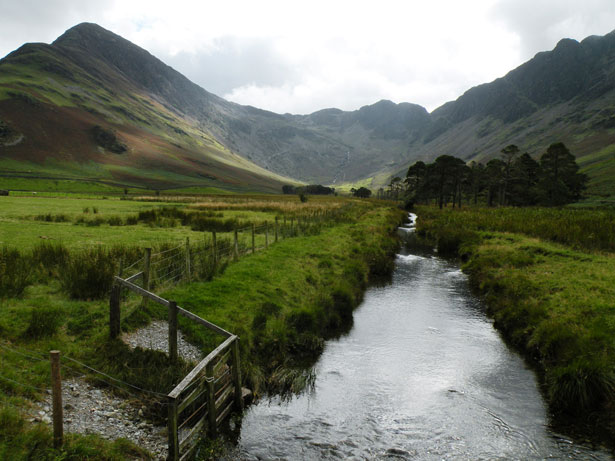
Realms of Faerie: Mountains


Let me get this here, up front: this post will cover more than mountains. Lots more.

Because, you see, mountains are made of stones--big chunks of solid minerals, hard and gritty or chalky and light. And these stones, indeed, compose the very foundation of any earth, fantasy or otherwise. So, clearly, mountains and the stones beneath them are pretty important in fashioning your fantasy world!

Let's begin with the Christian point of view. Psalm 18:2 says, "The LORD is my rock, my fortress, and my deliverer; my God is my rock, in whom I take refuge. He is my shield and the horn of my salvation, my stronghold." {NIV}

That's pretty straightforward, right? When we think of rocks, in their firmness and solidity, we are to be reminded of God, who is our perfect shield and solid fortress. So when we create our own rocks and stones as the foundation of our fantasy world, we have a heavy task to shoulder and a weighty responsibility to carry in representing the full truth of God's nature.

Who would've thought that even the lowly pebble had a message of God's grace embedded in its atoms?

Now for writing rocks and mountains.

The main thing to keep in mind, as with all fantasy writing, is to be original. How to do that, though? Sometimes the mind just seems inadequate for imagination!

As usual, I've written a few launching pads for your thoughts on rock and stone. If you'd like some additional inspiration, I would highly recommend reading Shannon Hale's young adult novel, Princess Academy. An extremely key aspect of that book is the particular kind of stone, linder, harvested in a local quarry, which enables a rural mountain community to face and overcome dangers of many sorts. Very instructive to those interested in writing rocks.

1. Composition: smooth and shiny or rough and gritty? Light and full of air or heavy and dense? Knotted and eroded or in some pearl-like "perfect" state? Chalky and powdery or smooth and glass-like?

2. Color: ah, joy! I love color! Unusual colors give a huge zing of life and energy to any sagging fantasy world. For a hint of what I mean, take a look at the rocks of our own world--those gorgeous reddish canyon rocks of Colorado's Garden of the Gods, or the clear crystals buried in underground caverns beneath our feet, and even jemstones like turquoise, emerald, ruby. The color or colorless possibilities are, as always, limitless.

3. Unique features: This includes the mountain ranges in your realm, as well as any unusual peaks that have their own name and history. Also included are any strange rock features anywhere in your land--fabulous undersea caves filled with salt crystals or volcanic arches made of cooled lava and the like. Dream big, expand your world's history, and create! But be warned: this is no small task. Do not rush the geography of your world.

Well, that's it for now! Enjoy writing!