Showing posts with label Inspiration. Show all posts

Friday, March 9, 2012

Fashion in Fantasy: Males


Last post we covered the wide and glorious expanse of dresses, corsets, ballgowns, and petticoats—it’s really cool stuff, believe me, so if you missed it, check it out! Today, we’re covering another key aspect to writing your fantasy novel: what your male characters wear.

1. Capes

            Of course I had to start with capes! What’s cooler than a cape, after all? Now, of course, most fantasy capes are found in the realms of superheroes and evil villains (I always picture Jafar sweeping around in one myself), but that’s not to say that you shouldn’t turn the stereotype around on its head! Just giving a flat 2D character a cape will add a touch of pizzaz, even some vanity, perhaps, and make him a much more fascinating character. This works just as well for women, by-the-bye.
 
2. Robes

            Bathrobes are there for a reason: they’re comfy, cushiony, and oh-so-soft. True, it’s a bit of a different sort of robes we mean here—I’m picturing something like Gandalf’s getup from Lord of the Rings. Also, of course, there’s the famous Harry Potter movie robes (which, in my personal opinion, are more like regular clothes with a cloak-plus-sleeves thrown on top). Anyway, robes can be a great option because they’re traditional and speak to a whole realm of magically-inclined fantastic folk. So try it out and see if it works in your story!
 
3. Leather jerkins and leggings

            My gut reaction to this one, gotta confess, is “ew!” However, I’d better acknowledge it, since this is probably one of the more accurate historical ensembles å la the Middle ages. First a little explanation: the “jerkin” is a long leather shirt that usually reaches to mid-thigh, and it’s worn over a cotton long-sleeve shirt called a doublet (traditionally). Then underneath the guy wears leggings, sometimes of leather and sometimes of cloth. Topping it off is leather boots. You may see this feature prominently among Rangers and other wild adventuresome folk, since it’s fairly rugged and easy to manufacture on its own.

4. Trousers

            In the style of Mr. Darcy of Pride & Prejudice fame, these long pants are basically just your modern suit-pants, though usually worn with a long coat and coattails. This works well for a more laid-back fantasy, or a fantasy with more modern tones. None of that Medieval nonsense for you!

5. Accessories

            Whether or not you’re up for the full dashing pirate gear, you should definitely consider adding the tri-cornered hat as a staple to any self-respecting fantasy guy’s wardrobe. If you’re a patriot fighting for your nation’s freedom or a pirate sailing twenty-three seas, you’ll want that distinguished hat to throw in the air to celebrate your victory—the hat that somehow just happens to keep appearing on your head even after many long journeys and battles. For other accessories, eye-patches and false legs or peaked wizard caps aren’t too bad, if a touch cliché. But think of your own distinguishing items for each character--a gold monocle, a particular pocket watch, a bowler hat--and use them when referring to the character in order to establish that person more firmly in your reader’s mind.


Doubtless, there are many more areas of dress and garb that we could explore. What are some clothes or accessories that you’ve used in your fantasy stories? Any helpful tips on writing about clothing?

God bless!

Thursday, December 29, 2011

How to Set Writing Goals for the New Year (That You'll Actually Accomplish)

If you're anything like me, you've spent the past few days thinking/worrying about the coming year. Maybe you made some New Year's Resolutions (speaking of which, if you've ever managed to keep any, I'm impressed). Or perhaps you looked back over the past year and thought of all the changes--great and small--that have occurred in your life.

The new year is an excellent time to re-commit to your writing. Perhaps you've become listless at the thought of your most recent project. Well, here's a ready-made opportunity to revitalize this aspect of your life! You could commit to writing every day or at set times each week or month.

No matter what you decide, however, there's one very important aspect that you must not ignore: if you make a promise to yourself to write, you must write. There's no getting around this important fact. If you let yourself down now, not only will you get no writing done, but you'll also fail yourself. If you break this promise and resolution, how are you to trust yourself in the future? You compromise your very self-respect.

Of course, if you decide on an unattainable goal, then you are setting yourself up for failure. Your goal should be "SMART"--that is, specific, measurable, attainable, realistic, and timely.

To make your goal specific, think small. A specific goal would be something like, "I want to write 500 words on my current story _____ every Wednesday and Saturday." A broad goal would be, "I want to write more in 2012." Do you see how making the goal specific could help you achieve it more easily?

To make your goal measurable, think in terms of landmarks--hours spent writing or word count. "I want to write 500 words" is measurable, because you can measure the quantity "500 words." Same with "I want to write for thirty minutes." You either write for that amount of time or you don't.

Next, your goal should be attainable. This is pretty self-explanatory--for example, "becoming a rocket scientist" if you flunked science is not very attainable, whereas "writing thirty minutes once a week" is attainable if you've been writing fifteen minutes each week. That doesn't mean your goals should be difficult--by definition, a goal is something that's a little ways outside of your reach, so that you have to strive to attain it. Just make sure it's possible to attain.

The next category, realistic, is actually one of the hardest to measure. On the one hand, if you set your goal too low, then you won't really be motivated to achieve it. However, if it's way too high, then there's no way you can attain it. So, for this one, it's really up to you. How much energy can you commit to this goal? How much time do you have on your hands? Are you both willing and able to achieve the goal?

Finally, you should make your goal timely. This just means to set a time frame for your goal. "I want to write 500 words someday" is a lot less motivating than "I want to write 500 words within the next 7 days." When you have a deadline, you will begin to strategize exactly how you want to accomplish it within the time frame you set.

So, again, remember--make your writing goals this new year "SMART" goals: specific, measurable, attainable, realistic, and timely. And when you've decided on them, why don't you tell me what goals you set? Enjoy setting and achieving your goals!


Saturday, September 24, 2011

Realms of Faerie: Sky


On to the next element of the natural world! Today, our focus will be on sky, and everything wrapped up in it--clouds, stars, sun, moon, air.

Faith & the Sky

Psalm 19:1 really sets the stage for our whole discussion: "The heavens declare the glory of God, and the sky above proclaims His handiwork."

Truly, the sky and air is an example par excellence of the beauty of God's creation. Just looking at the light and warmth of the sun, feeling the breath of wind on my cheek, everything points to God's mastery as Creator.

Psalm 147:4 says, "He determines the number of the stars; He gives to all of them their names." What a stunning example of God's power! Also a great idea for writing, too; giving stars names and valuing each individually could come in handy in a story!

Stars and sky can also be signs of future events--for example, the great star that heralded Christ's birth. However, we've got to remember that, as beautiful and powerful as the sky, sun, and stars are, they are mere reflections of God's glory and power (and not very good reflections, at that).


Writing & the Sky


The sky gives writers an amazing freedom to create and specialize. You've only got to put your imagination to work, and--voila!--the sky in your world is created, unique and important. A few tips, as usual:

1. Constellations ~ in any culture, stars and signs of the sky are important. They can represent that culture's great legends, and symbolize light and hope. C. S. Lewis created the constellations the ship, the leopard, and the hammer. J. R. R. Tolkien created many different named stars--Earendil's Star (attached to a very long legend, too), Valacirca, and many others.

2. Beings in the Heavens ~ C. S. Lewis created star-beings, which were stars that could assume a humanoid form and even marry (for example, Prince/King Caspian's wife was a star-being). Madeleine L'Engle's A Wrinkle in Time contains beings that used to be stars, but sacrificed their star-form and became other creatures in an effort to vanquish the dark. The possibilities are vast and varied, so create!

3. Clouds ~ Got any special formations? Deer-shaped? Special colors? Perhaps blue clouds represent coming evil?

4. Moon & Sun ~ One? Multiple? None? Try changing it up from the normal and expected. It might give that vital dash of life to a dragging story!

That's all for now, but don't be shy--dream and create!


Wednesday, September 7, 2011

Realms of Faerie: Fire


Fire is not technically a "realm," no. However, flames--as with the other elements--are essential ingredients to a well-crafted fantasy world. Thus, we'll be covering flames, both Biblically and technically, in our post today.

What is fire? Scientifically, fire is a rapid, persistent chemical change that releases heat and light and is accompanied by flame. In the simplest terms, fire is energy. Heat is a tangible form of that energy; light is a visible form of the energy. Fire. Energy.

Next, how does the Bible address and portray fire?

In various places, fire is a judgment from God. We see fire and sulfur raining down on unrepentant Sodom and Gomorrah (Genesis 19:24), the plague of hail and fire on the Egyptians (Exodus 9:24), and the ultimate fiery destruction of this earth in Revelation 20. Fire is something to be feared.

Fire also signifies God's presence. God spoke to Moses out of a fiery bush. God accompanied the Israelites through the wilderness in the form of a pillar of smoke in the day and a pillar of fire at night. Hebrews 12:29 says, "Our God is a consuming fire." Fire is a symbol of God's power, glory, and light.

Therefore, fire is clearly holy, and we should treat it with utmost care in our writing, especially as a sign of God Himself.


What about writing fire and flames?

Well, writing fire may seem straightforward. Flames flickering around a cozy campfire, sparks scintillating in the air, the gentle scent of woodsmoke wafting on the breeze... But, please, let's not sacrifice originality and expression here! We have imaginations for a reason!

A few tips to get you started:

1. Color. Color. Color. Let's just get this straight--the first thing to change, the most obvious and easily changed, is color. Color is a fundamental building block of the world; shift it, and originality is born. So what color shall your fire be? Will it burn a mellow grass green at the edges, deepening into a heart of dark forest emerald? Or would you rather have hot pink flames and a white core? It's up to you!

2. Power and intensity: how damaging is fire in your world? Can it be controlled by anyone? Can it be controlled by everyone?

3. Sentience: interesting to play around with. Is your fire at all conscious? Does it have thoughts? Can it speak? If it could, what would it say? Can it act on its own? What if fire could communicate with a particular sect of human beings...then brakes out of control, leaving it up to the humans to conquer it--using both effective communication and physical weapons? Experiment, and you may be surprised at the result!

4. Shapes: fire is usually conceived as a flickering triangle/tongue of light. But it could be so much more! What about round flames? Individual scuttling flames? Flames that take on the appearance of people or things (as in the Chronicles of Narnia book/movie, The Lion, the Witch, and the Wardrobe)? Explore and create!

5. Sounds: sure, flames can hiss and pop and crackle. But what if? What if? What if they...whispered? Sang? Chirped? Twittered? Whistled?

So, please, pick up your pencils and perform spectacular feats of imagination and flickering flames today!


XZ52S7YZ47YN

Wednesday, August 31, 2011

Realms of Faerie: Oceans


Oceans are wild and restless creatures, full of mystery, danger, and strange allure. As Fanny Crosby said, "Can ye fathom the ocean, dark and deep, / where the mighty waves and the grandeur sweep?"

Because of their power and strength, combined with delicate mystery, oceans have been popular throughout the history of fantasy. Almost every fantastic world has one; chances are, the one you're writing now contains at least one stormy deep. Perhaps this may be because our own world is so full of oceans--they cover 70 percent of the earth, after all.

Now what about writing oceans in light of Christian truth?

First, when God created the world, Genesis 1:2 tells us, "The earth was without form and void, and darkness was over the face of the deep. And the Spirit of God was hovering over the face of the waters." So, during creation, the world was watery and shapeless.

We also know that God judged the world through water once, with the Flood. Genesis 7:19, 22 says, "The water prevailed more and more upon the land, so that all the high hills everywhere under the sky were covered. ... Of all that was on the dry land, all in whose nostrils was the breath of the spirit of life, died."

However, God promised never again to send such a flood {Genesis 8:21}. When His final judgment comes, it will be with fire--but more on that next time :) .

Additionally, Jesus is our living water; those who drink of Him shall no longer thirst, but find spiritual refreshment, renewal, and life through Him {see John 7:37-39}.

What do all these verses add up to? How can we apply them to our writing? Well, if you're really interested, I suggest you dig deeper into the topic of Biblical water--believe me, there's lots more to discover! However, in general, water is our life-source, and, in a physical way, provides continued survival. None of us would last long without water. In the same way, on a spiritual level, we all need Christ's living waters to quench our inner thirst and to survive with life eternally. Pretty deep stuff, certainly, but crucial.

So, when writing oceans, be sure to reflect Jesus' life-sustaining spiritual waters through them!

Now for the nitty-gritty of imagining and writing oceans:

1. Color! {always consider color when creating anything. it stimulates the imagination immensely} Does your ocean come in typical shades of aqua to teal to grey to green? Or is it more of a reddish-orange ocean? Is it pure white? Any symbolic significance of the color?

2. Weather Patterns: what does a flat sea symbolize or reveal about your world? Do the waves form patterns? For example, what if secret messages were written in the waves that only certain birds could see and decipher?

3. Life: What creatures make your ocean their home? Is it the usual suspects of clownfish, turtles, and mermaids, or did you throw in a few bird/fish creatures, plus a kraken or two? Mostly tropical marine life? Deep water darkness creepy sharp teeth fishy creatures? Come up with some water-creature of your own to reflect your ideas about the ocean!

Enjoy writing!


Tuesday, August 23, 2011

Realms of Faerie: Mountains


Let me get this here, up front: this post will cover more than mountains. Lots more.

Because, you see, mountains are made of stones--big chunks of solid minerals, hard and gritty or chalky and light. And these stones, indeed, compose the very foundation of any earth, fantasy or otherwise. So, clearly, mountains and the stones beneath them are pretty important in fashioning your fantasy world!

Let's begin with the Christian point of view. Psalm 18:2 says, "The LORD is my rock, my fortress, and my deliverer; my God is my rock, in whom I take refuge. He is my shield and the horn of my salvation, my stronghold." {NIV}

That's pretty straightforward, right? When we think of rocks, in their firmness and solidity, we are to be reminded of God, who is our perfect shield and solid fortress. So when we create our own rocks and stones as the foundation of our fantasy world, we have a heavy task to shoulder and a weighty responsibility to carry in representing the full truth of God's nature.

Who would've thought that even the lowly pebble had a message of God's grace embedded in its atoms?

Now for writing rocks and mountains.

The main thing to keep in mind, as with all fantasy writing, is to be original. How to do that, though? Sometimes the mind just seems inadequate for imagination!

As usual, I've written a few launching pads for your thoughts on rock and stone. If you'd like some additional inspiration, I would highly recommend reading Shannon Hale's young adult novel, Princess Academy. An extremely key aspect of that book is the particular kind of stone, linder, harvested in a local quarry, which enables a rural mountain community to face and overcome dangers of many sorts. Very instructive to those interested in writing rocks.

1. Composition: smooth and shiny or rough and gritty? Light and full of air or heavy and dense? Knotted and eroded or in some pearl-like "perfect" state? Chalky and powdery or smooth and glass-like?

2. Color: ah, joy! I love color! Unusual colors give a huge zing of life and energy to any sagging fantasy world. For a hint of what I mean, take a look at the rocks of our own world--those gorgeous reddish canyon rocks of Colorado's Garden of the Gods, or the clear crystals buried in underground caverns beneath our feet, and even jemstones like turquoise, emerald, ruby. The color or colorless possibilities are, as always, limitless.

3. Unique features: This includes the mountain ranges in your realm, as well as any unusual peaks that have their own name and history. Also included are any strange rock features anywhere in your land--fabulous undersea caves filled with salt crystals or volcanic arches made of cooled lava and the like. Dream big, expand your world's history, and create! But be warned: this is no small task. Do not rush the geography of your world.

Well, that's it for now! Enjoy writing!


Saturday, August 20, 2011

Realms of Faerie: Forests

{I apologize for the delay in getting this post out--I'm sure you know how summers can be, especially with those nagging fantasy projects you've been wanting to accomplish}


This is the second post in our series on realms of Faerie. Last time we talked about castles; now, we're moving into the realm of nature to cover forests.

Forests of all shapes and sizes abound in every proper fantastic world. The Enchanted Forest of Patricia C. Wrede's Enchanted Forest Chronicles is a prime example of such a forest, brimming with worthy woodkeeper's sons, damsels in distress, dragons, and magical enchantments of every sort. You know the type, I'm sure.

As far as faith goes, forests do not typically pose a problem to Christianity. After all, God was the One who created forests in the first place! In fact, we can even say that by creating forests in our imagination, we are reflecting the nature of our Creator God. Pretty neat!

But there's some bad news too. Unfortunately, in fantasy these days, forests often go through the same uses over and over again: a place of refuge for bandits or the big bad wolf, somewhere to gather herbs of healing, a dangerous area through which the long-suffering hero must travel, the ideal location for a poor widow's cottage, and so on.

And, if that weren't bad enough, these forests often consist--dare I say--of trees just like the ones around us {maples, birches, aspen, and so on}, and, further, forest animals suspiciously like the ones we see every day {do I need to mention the word "deer"?}.

Clearly, we need to up the ante on our forest originality!

Need a gentle nudge to get your little gray cells thinking in the right direction? Here are a few things to think of when crafting fantasy forests.

1. Color: Maybe color doesn't matter in the least in your story. So what? Go ahead, make your forest an unusual shade of titanium gray, dove white, or perfume pink, and I guarantee it'll make you think a little deeper about the structure, biology, and cosmology of your fantasy universe as a whole! Just compare it to our forests in autumn or spring--and, really, who needs a boring old green forest?

2. Type of tree: The first thought that comes to mind when I hear the word "tree" is a tall object with branches and leaves. But not necessarily! What if you had a forest made of poles, like a bamboo forest? Or if you had a forest made of gigantic mushrooms? Or a forest of large, fluffy objects that grow on stems {think Dr. Seuss}? The possibilities are literally endless!

3. Use of forest: Honesty, you do not need a forest to conceal your poor dear kidnapped princess. There are so many more clever alternatives involving toothpicks and particularly skilled swordsmen--not to mention imagination. But, let's say you do need that forest for the princess. What if, at the same time, you made the forest come to life, as with the Ents and trees in Tolkien's Lord of the Rings? Then your princess not only faces the task of getting away from her captors, but also somehow befriending or battling the trees to get out. Much more original, aye?

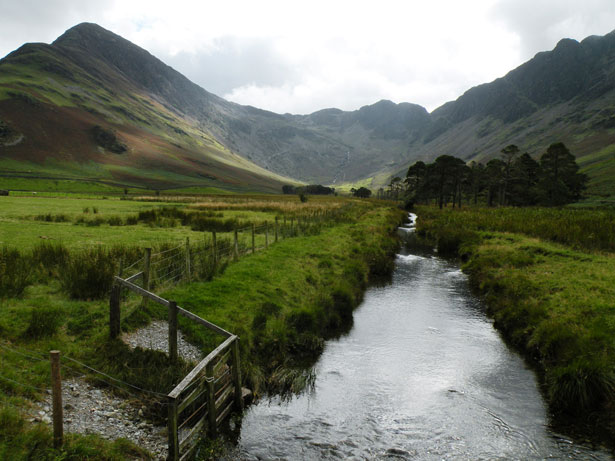
I certainly hope that those are enough questions to get you thinking the best ways to combat boring old forests. I'll also post some public domain pictures below for further inspiration :)