Showing posts with label Faith. Show all posts

Sunday, June 2, 2013

Creating Fantasy Languages


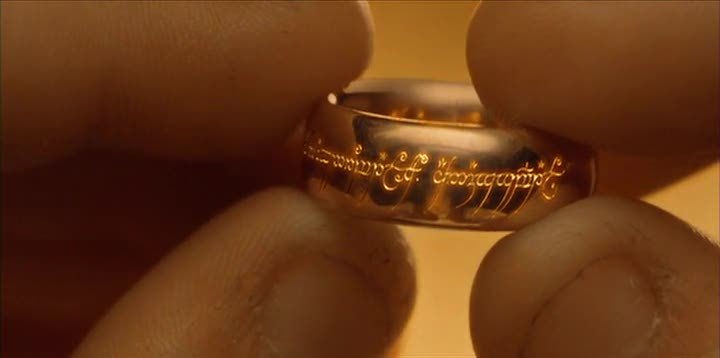
One of the most interesting aspects of fantasy works is the fact that they take place in worlds of their own, with the potential for entirely new life-forms, cultures, and languages. A few fantasy authors have capitalized on this unique opportunity by going so far as to create their own language(s) to populate their fantasy world. Of course, J.R.R. Tolkien stands as an eminent example of such a practice.

In today’s blog post, I’d like to examine first of all whether it’s worthwhile to create a language/languages for your world, and second of all provide you with some resources in case you are interested in creating languages. So, without further ado, let’s begin.

Pros:
  • Languages provide depth: There’s nothing that proclaims the hard work and seriousness of your story than a language. Adding a unique fantasy language adds an immediate dose of credibility to your story that your readers may enjoy.
  • Languages add believability to characters and settings: Languages can be invaluable tools for developing various unique civilizations and cultures in your story. Also, individual characters may be better described and recognized based on the language(s) that they speak.
  • Languages can be fun to create: This one’s pretty self-explanatory—languages are a fun break from the grind of churning out a rough draft or meticulously editing your manuscript. Just don’t get so caught up in languages that you neglect the story itself!
  • Languages are important biblically: The account of the tower of Babel tells of a time in which everyone spoke one language and “nothing that they propose to do will now be impossible for them.” (Gen 11:6) Recognizing the power of language, God created different languages, causing people to be scattered and divided throughout the earth. In short, languages have power biblically. Don’t underestimate this power in your story!


Cons:
  • Languages are time-consuming to create: It takes a lot of effort and time to come up with a unique language, especially if you use a distinct alphabet. Tolkien himself began the work of creating his elvish languages in his teen years, and the project was still in progress in his forties. Be aware that this isn’t a project to take lightly!
  • Languages don’t advance the plot and rarely help to create better characters: While languages do have some role in the story as part of the setting, they are not usually instrumental to the progress of the plot itself. They also don’t usually add to the believability of characters, since other elements—such as their likes, their dislikes, and their interests—are more essential to readers’ knowledge of characters. So don’t let languages become too much of a priority.
  • Languages require explanation and can distract from the overall story: Let’s be honest here—foreign languages slow the action down. They should be used sparingly, if at all. Be sure to weigh the benefit of adding depth to the cost of slowing down the story before you insert any languages into the story!


With that analysis behind us, let me point you to some resources in case you would be interested in creating languages.

The Language Construction Kit: a very helpful resource for those trying to create an artificial language. You can use the resources in as much or as little depth as you wish.

Language Creation Society: if you’re really serious about creating a language, they have some helpful resources on their website. Be warned—it’s not for the faint of heart!

Discussion Thread on Creating Phonetic Systems: You may have heard me mention the HolyWorlds forums once or twice on this blog. That’s because they contain many, many helpful discussions on topics relevant to Christian fantasy writers—including this particular easy-to-understand guide to creating languages and phonetic systems.

Article on How Language Affects Behavior: this article by Stanford researcher Lera Boroditsky highlights examples of how the language you speak affects how you see the world and how you behave. Although it’s not directly related to creating languages, it is very fascinating to skim if you have a few minutes to spare.


And that brings us to the end of today’s post. Now it’s your turn: have you ever tried inventing a language? How did it go? Any advice on how to include languages in your fantasy story?


Friday, April 26, 2013

Review: The Circle Series

Today it's about time for another book review, and I'm particularly excited to introduce today's book (or, more properly, series). I'll be reviewing Ted Dekker's Circle Series, which many people regard as a masterpiece of Christian literature. You'll see more of my thoughts below, so without further ado, here is my review!

Title: The Circle Series (Black, Red, White, Green)
Author: Ted Dekker
Page Count: 1,553 pages total

Stars: 4 of 5
4 = well-written and a good read

Teaser: After being chased by mysterious gunmen, Thomas Hunter wakes up in an "Other Earth" that he keeps returning to every time he falls asleep. This "Other Earth" at first resembles an unfallen Eden. Soon, however, evil and sin threatened the Other Earth. Bad as this may seem, these catastrophic events in the Other Earth are eclipsed by the threat of a deadly virus about to be unleashed on our Earth. Thomas Hunter gradually becomes a leader in both worlds as he attempts to avert both impending disasters.

Age level: 14+ (mid-teens)

Violence: 3 of 5
3 = definitely some gory portions, especially in Green, but nothing beyond PG-13 material

Romance: 2 of 5
2 = love and romance are a part of the story, in a restrained and godly manner

Language: 1 of 5
1 = a few instances of slight language

Christian worldview: Dekker, as a Christian author, writes an explicitly Gospel-centered novel series along the lines of C.S. Lewis. I admit I was a bit doubtful at first as to how the Gospel would tie into the story and whether it would feel over-spiritual or too allegorical. However, I think on the whole the series managed to reveal true Christianity as it might appear in both our earth and the "Other Earth" without being too cliche or trite. As such, I believe Dekker's Circle Series is a valuable addition to Christian literature.

My personal opinion: I love being able to dig into a long and satisfying series, and Dekker's Circle Series provides exactly that, with the bonus benefit of Christian themes. I was particularly impressed with Dekker's closure of the series and how it formed a sort of circle in and of itself. (I know some others found fault with this circular ending, but I thought it was clever and it resolved my unanswered questions well.)

So then why did I give the series only 4 stars? To be honest, I wasn't always too impressed with Dekker's characters and writing style. His plot, to be sure, is excellent. However, the word choice and sentence structure was occasionally clunky and overall seemed a bit plain and simplistic. The characters, too, didn't always feel alive and real, especially the female characters. On the other hand, as I mentioned above, the plot is truly original, the settings are splendidly crafted (especially his descriptions of "paradise"!) and I loved to hate the villains.

Overall, then, the Circle Series is an impressive work that I would urge any Christian interesting in writing fantasy to read. It's enjoyable, tense, action-packed, and a fascinating glimpse into Christian redemption viewed through the lens of a fantasy world.

Now your turn: have you read the Circle Series or any other Ted Dekker books? Do you like how he incorporates his faith into his stories? Any other comments on his work?

Saturday, March 30, 2013

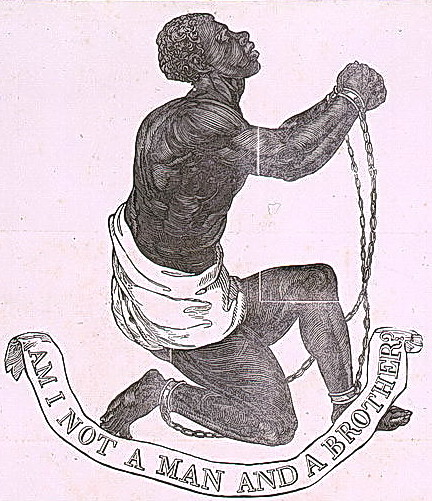
Slavery & Human Trafficking

A few weeks ago, I began a series on tough, ugly issues that confront our world (and fantasy stories) today. I encouraged us as fantasy writers to use our writing as a platform for change. So far, I've spoken about racism and bullying. Today, I'll continue the series with a post on the very ugly issue of slavery and human trafficking. It'll be a bit longer than usual, but please bear with me!

I. Slavery in the Bible

First, some Biblical background. In the Bible, slavery is mentioned multiple times, especially in the context of the enslavement of the people of Israel. The Bible addresses how horrible slavery felt to those suffering in it by saying in Exodus 2:23, "The people of Israel groaned because of their slavery and cried out for help." However, the story doesn't end there. The Bible tells us that, "Their cry for rescue from slavery came up to God. And God heard their groaning, and God remembered his covenant with Abraham, with Isaac, and with Jacob. God saw the people of Israel--and God knew." (verses 24-25) And God acted by bringing the people out of slavery.

In the New Testament, where slavery was a common practice, the church did not forbid slavery. Rather, speaking to slaves, the Bible said, "Slaves, obey your earthly masters with fear and trembling, with a sincere heart, as you would Christ...rendering service with a good will as to the Lord and not to man." (Eph. 6:5-7) To masters, Paul wrote, "Do the same to [your slaves], and stop your threatening, knowing that He who is both their Master and yours is in heaven." (verse 9) We should keep in mind, though, that slavery was legal back then and that the early church tried to obey the laws as much as possible, so long as they did not contradict God's law. More important for today may be the verse Micah 6:8, which reads, "He has told you, O man, what is good; and what does the Lord require of you but to do justice, and to love kindness, and to walk humbly with your God?" It is our calling as Christians to fight injustice--including human trafficking--in the world today.

But let's dig a little deeper into Scripture. The Bible also refers to slavery in a deeper spiritual sense. Romans 6:17-18 and 22 reads, "But thanks be to God, that you who were once slaves of sin ... and, having been set free from sin, have become slaves of righteousness. ... But now that you have been set free from sin and have become slaves of God, the fruit you get leads to sanctification and its end, eternal life." While we know that physical slavery is a horrible injustice, we must remember that as Christians there is an even greater issue: the slavery of people's hearts to sin.


II. Slavery Today

Now let's fast-forward two thousand years to slavery in today's world. For some background, I'd like to quote from the information found on International Justice Mission (IJM)'s website.

Forced labor slavery is the use of deception, threats or violence to compel someone to labor without pay or for no pay beyond the substance necessary to continue the labor. It is called by many names, including debt bondage and forced labor, and is a form of modern slavery.

Modern-day slaves face brutal conditions in rock quarries, rice mills, brick kilns, fisheries, garment factories and many other industries around the world. Victims of slavery are often deprived of the freedom of movement, unable to leave the facility where they are forced to work and unable to seek employment elsewhere. Forced laborers are also often victims of violent physical and sexual abuse.

Debt bondage is a common method used to entrap victims of slavery. In this illegal scheme, an employer offers a small loan (often as low as $25) to a laborer, with the understanding that the loan will be repaid through work at the owner’s facility. The owner then ensures this repayment is impossible by refusing to pay the employee and inflating the loan through exorbitant interest rates, false charges, and denying requests for information on the status of the loan. The laborer is forbidden to leave the work facility until the loan is “repaid” in full—despite the fact that the work already completed by the laborer should have fulfilled any obligation to the owner long ago. The employer becomes the laborer’s owner—and the loan’s conditions are often extended to relatives of the victim, including children, who are forced to work off a false and ever-growing debt.

THE FACTS
  • There are an estimated 27 million slaves in the world today—more than any other time in history.
  • Children below the age of 18 years represent an estimated 26% of all forced labor victims.
  • In a wide-reaching survey conducted by the United Nations Office on Drugs and Crime, approximately 40% of countries had not registered a single conviction against perpetrators of trafficking and slavery, which is crucial for deterrence.


III. Slavery in Fantasy

So, now that we've got that information under our belts, what can we do? Besides donating our time and resources to supporting ministries like IJM, we can harness our writing as a tool for change. How?

First and foremost, you can mention the issue of slavery or human trafficking in your story. Even just mentioning it will raise awareness of the issue. Getting the problem out in the open is crucial to eventually affecting change in our world. It doesn't have to be a major theme in your story, but knowing that the problem exists in the background could make a world of difference.

Second, if your story allows it, you can describe and show the suffering caused by slavery through the lives of one or more of your main characters. Mentioning the problem of slavery is all very well, but it's only when people realize that slavery is a problem--an unjust, painful, hideous problem--that people will start to think about what they can do to change it. As writers, one of our best tools is making something come alive to our readers. What better way to use that skill than to make the pain of slavery visible and tangible to readers, making them realize that not only slavery exists, but it must be changed!

Finally, if your story permits, you can even propose solutions to slavery through your story. Perhaps the talking eagles in your fantasy world are enslaved, but your main characters, a group of fearsome magical mice, wage a war to free the eagles. Or maybe your characters recruit freed slaves to join the fight against the evil dark lord. Maybe your main character, a former slave, returns to the place where she was kept as a slave in order to rescue her family or friends. The possibilities are as wide as your imagination; through these and other ways, you can use your story to propose solutions to slavery.

As always, do keep in mind that your story is not a sermon. Your story is life contained in words on the page. Never try to force your story into a message; instead, allow the flow of the words and the lives in the story to allow your message to shine through.


Now tell me: can you recommend any good books that tackle this problem? Have you ever tried to write about slavery? Do you have any suggestions or things to add to what I've mentioned above? Any resources about slavery in the Bible? Please comment and let us know!

(By the way, if you haven't had a chance to yet, I'd really recommend checking out IJM and getting involved in the fight against modern slavery.)


Friday, March 22, 2013

Bullying

Last week, I started a new series on tough issues in our world that we as fantasy writers can--even should--confront in our fantasy stories. If you missed out on my post last week, I highly suggest that you read it here. In today's post, I'll be talking about another extremely serious issue: bullying.

Most of us have had experiences with bullying before, especially as children. Now a few points, first, about bullies. According to many studies, bullies are often insecure people who tear others down in order to make themselves feel better. Bullies are not automatically "evil." Rather, they are often motivated by envy or resentment and may think that bullying is the only way they are esteemed, valued, or noticed. In terms of personality types, bullies are usually authoritarian/dominant personalities that enjoy controlling others, especially those against whom they are prejudiced.

With that information under our belts, let's turn to bullying itself. Bullying refers to some form of coercion or belittlement, whether emotional, verbal, or physical. Bullying often happens in the presence of a crowd of uninvolved bystanders, which adds to the victim's sense of humiliation. Bullying involves hurting someone through some sort of abusive language or behavior, usually intentionally. In some instances, casual or flippant words may have the same effect as bullying, even if they were not intended spitefully. Some common forms of bullying are name-calling, exclusion from events, verbal or written abuse, and physical violence.

Those who are victims of bullying often suffer the effects of bullying all their life. They typically feel belittled, and sometimes take that out on others by becoming aggressive or bullying themselves. Victims often feel lonely, depressed, and suffer from very low self-esteem. If you have had any experiences being bullied, you will remember the feeling of humiliation and misery as a result. It should come as no surprise, then, that those who are bullied also suffer from increased risk of suicide.

Bullying is a huge issue in our world, and can be found in as many different environments as there are people: school, the workplace, clubs and activities, on the Internet, and more.

Now, how can we translate this issue to our own fantasy worlds? The opportunities are nearly endless. Even fantasy races can participate in bullying, whether as bullies, bystanders, or victims. The psychological consequences of being bullied can add layers of meaning to certain characters in your story. You could include bullying as a backstory for a character, or you could make a character who has to stand up to bullying over the course of your novel.

One thing that I'd like to encourage here is that we, both as people and as writers, should have compassion on everyone involved in bullying. Of course we should condemn bullying wholeheartedly. However, we can also recognize that bullies and bystanders might sometimes deserve some compassion because of the things that are out of control in their lives (although that's not to say we should support their responses). Keep in mind the fact that everyone is hurt by bullying. Look for ways to translate bullying in your story into more complex situations with the potential for redemption.

Let me know what you think. Have you ever written a story in which someone is bullied? Do any of your "bad guys" show signs of being bullies? Have you read stories that dealt with this issue? (Note: If you're interested in finding out more information about bullying, I'd start with Wikipedia's overview here and the US government's stop bullying site here.)


Sunday, March 17, 2013

Racism

In these next few blog posts, I'd like to focus on some deeper, darker issues that we as fantasy writers are in a perfect position to tackle. For today, we'll be talking about racism.

First off, why should we even mention ugly issues like racism in a fantasy story? Isn't fantasy all about escaping the dark realities of this world and immersing readers in a world full of fairies and rainbows and light? As anyone who has read fantasy will tell you, no, rainbow-fairies and escapism is not what fantasy is all about.

In fact, I believe that fantasy is a medium that is excellent for conveying even the darkest truths about this world. You see, fantasy is like the reflection in a pond on a crisp autumn morning. The real world inspires the fantasy reflections. Sometimes, though, by seeing those reflections, your readers will be able to look at the real world with a clearer eye. What fantasy gives us, then, is a change of perspective. When we finish the last page and close the book, we don't look at the world in quite the same way.

So, in essence, fantasy provides us with the chance to challenge and maybe even to change a reader's view of the world. What a task--and what an opportunity!

Now that we've dealt with the power of fantasy, let's get down to the dirty business of racism. As most people know, racism refers to judging others based only on their skin color or race. Racism can result in one race believing itself superior to others and segregating or enslaving other races.

How does racism fit into fantasy? Well, most fantasy worlds have multiple beings/species/races. For example, Lord of the Rings has a variety of sentient beings--Elves, humans, wizards, and hobbits, among others. What if hobbits suddenly decided that their height entitled them to a superiority above all the other beings in Middle-Earth? Instead of a dark lord you would have a hobbit, both terrible and beautiful and powerful and short! Or, to make the issue a bit more human, what if the men of Gondor decided that they were superior to the men of Rohan and Bree and the North, and then decided to enslave anyone other than the inhabitants of Gondor?

As you can see, there are ample opportunities for racism, segregation based on race, and racial slavery even in fantasy stories.

I suggest that you take a close look at your own story. Is there a place where your story might benefit from the tension and conflicts created by racism? Do you have multiple species or races in your story, and does each one have a separate place in society? If your fantasy world has everyone equal, then think about the history of your world. Was there a time in the past where everyone was not equal? If so, how did the present equality happen, and how could you use those lessons in your story?

All of the above is not to say that you should be preachy in your stories or start ranting about the horrors of racism. Your story, not a moral lesson, is what's important here. I do suggest, though, that you take the opportunity to use your story to reflect some of the darkness in the real world. Challenge your readers by showing them ugliness not just in fantasy but in their own lives. Give people the chance to learn and change. Whether you use racism or some other topic (maybe one that I'll be covering over the next few weeks), I hope that you use your story as an opportunity to challenge and change the world.


Saturday, December 29, 2012

Top Blog Posts of 2012

The year 2012 is almost at an end--and what a year it has been! As we think over what this year has brought us, let's also look back at some of the highlights of the blog this past year. So, without further ado, here are the top 15 blog posts of 2012! (Posts are listed in chronological order.)

The Hows and Whys of Naming God in Your Fantasy Story

The Weapons in Fantasy Series -- Swords, Bows, Armor

The Fashion in Fantasy Series -- Females, Males, Shoes

The Villain Series -- 5 Ways to Kill Your Villain, Recipe for a Dark Lord

Easter and Fantasy

The Names Series -- Names in the Bible, How to Name Your Characters

Costs and Benefits of Self-Publishing

The Colors in Fantasy Series -- Tools, Opposites

So go ahead and click those links to read any posts you missed! And if you liked other posts from the blog, be sure to comment and let me know. I look forward to an even better 2013!

Sunday, October 14, 2012

Review: Inkheart


Title: Inkheart
Author: Cornelia Funke (Translated from the German by Anthea Bell)
Page Count: 534

Stars: 5 of 5
  5 = an amazing book that delivers a punch. Read this! 

Teaser: Imagine it were possible to bring the characters from a book to life. Not like when someone reads a book with such enchantment that the characters seem to jump off the pages and into your bedroom…but for real. Then, imagine if those characters brought their world into ours.

One cruel night, Meggie’s father, Mo, reads aloud from Inkheart. As he reads, an evil ruler named Capricorn escapes the boundaries of fiction and lands in their living room. Somehow, Meggie and Mo must learn to harness the power of reading aloud to end this nightmare.

Age level: Teen and up (13+)

Violence: 3 of 5
3 = between PG and PG-13 violence that plays a major role in the story

Romance: 1 of 5
1 = there's a hint of romance at a PG level

Language: 1 of 5
1 = replacement swear words, implied swearing, etc.

Christian worldview: The major “magical” element is that certain characters in Inkheart can read aloud and bring fictional characters and objects into the “real world.” This is basically explained as a skill and/or a genetic trait, so it doesn’t conflict the Christian worldview. The villains also converted an old church to use as their “audience hall,” but that’s clearly seen as wrong.

My Personal Opinion: This book is one of those rare few that qualifies as an all-time favorite. The concept alone is breathtaking. What if characters in books were real? Funke also opens each chapter with a thought-provoking quote. What’s more, Funke’s characterization made each character seem distinct, vivid, and real. Meggie’s voice especially enchanted me (in a literal and figurative sense). The plot was so gripping and each twist and turn completely unexpected. The climax was absolutely perfect and brilliant.

The one problem with this story? Funke wrote a sequel—in fact, she made it into a trilogy. The story that ends in Inkheart is beautiful, but the story that she continued…well, it didn’t have the same “magical” quality to it that Inkheart did. I finished the trilogy and enjoyed it, but the ending left me definitely disappointed. If you liked Inkheart, then give the other books a try, but be warned: they’re very different in substance and even in style from the original. Inkheart has also been made into a movie, which doesn’t live up to the original at all, but it’s not a horrible movie. In fact, I rather enjoyed it.

So, bottom line: read Inkheart! It’s truly breathtaking.

Saturday, October 6, 2012

Review: The Silver Shawl


In today’s post, I’ll be reviewing a book, but not just any old book. Today's story is a historical mystery novella by Elisabeth Grace Foley. Why the changeup? For one thing, today is the publication of The Silver Shawl, and it’s fun to celebrate with authors as they release their new books. For another thing, I love Agatha Christie’s books—if you don’t, you need to—and The Silver Shawl was highly reminiscent of Christie’s work. Plus, it’s enjoyable and fun to read. So, with that said, let me enter full review mode.

Title: The Silver Shawl
Author: Elisabeth Grace Foley
Page Count: 45

Stars: 4 of 5
4 = well-written and a good read

Teaser: In a small town in turn-of-the-century Colorado, a young woman has disappeared from the boarding-house where she lives. Her distraught fiancé is certain that she must have been kidnapped. But the case takes a new turn when a city detective appears on the scene, looking for a woman who matches the description of the missing girl. Was Charity really kidnapped, or did she have a reason to flee? Mrs. Meade, a gentle but shrewd widow lady who lives across the hall in the boarding-house, feels that there is something wrong with the story of Charity's disappearance...but can she unravel the mystery before it is too late?

Age level: Preteens and up (10+)

Violence: 2 of 5
1 = mild injuries appropriate for all ages

Romance: 1 of 5
1 = there's a hint of romance at a PG level

Language: 0 of 5

Christian worldview: No religious concerns of note. On the positive side, Silver Shawl had a sweet and Biblical portrayal of the fiancé-fiancée relationship.

My Personal Opinion: I don’t usually read novellas, much less historical novellas, much less historical mystery novellas, so I wasn’t sure what to expect when I began Foley’s book. From the beginning, however, I was captivated by Foley’s use of details. The descriptions of characters, the settings, the small gestures—everything felt vivid and true-to-life.

In the larger, overall structure of the story, the book read a lot like a short story by Agatha Christie. Mrs. Meade wasn’t quite a Mrs. Marple, but there were certain similarities nonetheless. The mystery wasn’t obvious, either; it left me guessing for quite a long time, which is saying a lot, for me. 

My one point of criticism is that the end of the story lagged a bit. There wasn't quite enough tension to keep the story going for the last few pages. However, otherwise, the story and characters were spot-on.

So, in all, I enjoyed The Silver Shawl quite a bit. If you haven’t had the chance yet to discover this marvelous world of short historical mystery, I suggest that you start right now! And you can leave a comment, too, to celebrate a fellow-writer’s self-publication day.

Friday, September 28, 2012

Review: The Fetch


In today's post, I'll review a book I read recently called The Fetch, which has a fantastic premise about Anastasia Romanov but (in my opinion) a rather flawed execution. A word of caution: this book is the first in a proposed series. While it stands alone acceptably enough, the story is not quite complete by the end of the novel.

Title: The Fetch
Author: Laura Whitcomb
Page Count: 384 pages

Stars: 3 of 5
  • 3 = enjoyable. May have minor content issues or flaws in the writing.
Teaser: Calder is a Fetch, a “death escort” who brings the souls of the dying to a decidedly non-Christian heaven (there is no Hell, as Calder explains). After falling in love with an earthly woman, he breaks his vows as a Fetch and stays on earth to try to find her. The woman happens to be one of the Romanovs, on the way to her death on the eve of the Russian Revolution. The story “solves” the mystery of why Anastasia and Alexei’s bodies were not found with the rest of their family.

Age level: Mid-teens and up (15+)

Violence: 3 of 5
  • 3 = between PG and PG-13 violence that plays a major role in the story
Romance: 2 of 5
  • 2 = romance is minor but present (for instance, one kiss at the end of the story)
  • Note: this book is technically classified as "supernatural romance." However, I felt the romance was really a side issue and hardly came up until the very end.
Language: 1 of 5
  • 1 = replacement swear words
Christian worldview: Clearly, the idea of a Heaven without a Hell is contrary to Christianity at its heart. If everyone is saved, then how can God have any justice or integrity? To be honest, God was really brushed aside in the story as an unsolvable mystery. The book did mention a historical Flood and Tower of Babel, but its explanations were again not entirely Biblical.

My thoughts: My favorite part of this story was the incorporation of the Russian Revolution and the Romanovs. By setting it in such a specific time and place, Whitcomb managed to surpass the ordinary clichés of supernatural fantasy and add suspense in regard to how she would clear up the mystery of Anastasia. The idea of Fetches was also intriguing, although I don’t think the philosophy of them stands up at all against the Bible. Still, not a bad idea.

As far as the romance goes, even though the book is billed as “supernatural romance,” there really wasn’t any romantic interaction between the characters until nearly the very end. It almost left me wondering whether there would be any after all.

The book’s biggest weakness, in my opinion, was that it was far too long. The characters spend half of the book on a chase around the world that seems pointless, and then the ending breaks in abruptly. If instead the author had ended the story about halfway through the book, with the excitement of death and danger still in the air, I might have been a lot more satisfied.

Overall, The Fetch was an enjoyable read but not outstanding. I’d recommend it to those interested in Anastasia or in the modern genre of supernatural romance.

Tuesday, September 25, 2012

Review: The Swan Maiden


The Swan Maiden grabbed my attention with its gorgeous cover. The contents of this fairy-tale-spinoff kept me (mostly) enchanted, although in all I must say that the cover almost exceeds the story. Enjoy the review, and don't forget to leave a comment below!

Title: The Swan Maiden
Author: Heather Tomlinson
Page Count: 304 pages

Stars: 3 of 5
  • 3 = enjoyable. May have minor content issues or flaws in the writing.

Teaser: Doucette wants to be a “swan maiden,” a creature of flight and magic, like her two elder sisters. At last, she has the chance to realize her dream—but the day comes when she must decide between love and magic.

Age level: Teens and up (13+)


Violence: 2 of 5
  • 2 = PG-level violence that's a minor theme in the book

Romance: 3 of 5
  • 3 = romance is a major theme of the story but is appropriate for teens

Language: 0 of 5

Christian worldview: The magic in this story seems to be hereditary and viewed with suspicion or even dislike. (See this post for my thoughts on how magic in fantasy can or can’t mesh with faith.) The biblical lesson that a little power makes you want a little more is clearly told. The value of faithful love is also evident in the story.

My thoughts: This story was an elegant and enjoyable fantasy. I immediately connected with the feelings of jealousy and longing that Doucette experienced as she watched her older sisters flaunt their magic in front of her. The hero of the story, while a bit cliché, did show a lot of courage and honor and loyalty. Although the setting is a medieval fantasy, Tomlinson manages to deftly sidestep clichés by making the story focused on medieval France and incorporating very vivid details of life to make the setting come alive to readers.

My major problem with The Swan Maiden was a decision Doucette made towards the end of the story. The decision felt too selfish for her and unlike the way she’d behaved in the past. I didn’t think it was completely necessary for the story, either, particularly considering the ending. Still, it taught her a good lesson that I won’t spoil here.

In sum, The Swan Maiden was a light fantasy with good themes. A nice book to read with a cup of tea on a rainy day.

Friday, August 31, 2012

Review: Princess Academy


To start off the new column on book reviews, I’d like to introduce one of my favorite books of all time, a really sweet fantasy classic: Princess Academy. Let me know your thoughts on the book in the comments!

Title: Princess Academy
Author: Shannon Hale


Stars: 5 of 5
• 5 = an amazing book that delivers a punch. Read this! 


Teaser: High on the slopes of Mount Eskel, Miri’s family has lived forever, pounding a meager living from the stone of the mountain itself. Miri dreams of working alongside the others in the quarry, but she has never been allowed to work there—perhaps, she thinks, because she is so small.

Then word comes from the lowlands: the prince of the lowlands must choose a bride from Mount Eskel. In preparation for this unheard-of event, Miri and the other rustic Mount Eskel village girls attend a makeshift academy to prepare for royal lowlander life. At the academy, Miri must challenge her mind—and discover her heart—before danger overwhelms the school.


Age level: Preteens and up

Violence: 2 of 5
• 2 = PG-level violence that's a minor theme in the book


Romance: 2 of 5
• 2 = romance is minor but present (for instance, one kiss at the end of the story)


Language: 0 of 5
• 0 = none


Christian worldview: There’s mention of the king’s priests who divine the location of the princess-to-be. However, nothing more is said of these priests than a brief reference to explain the reason for the prince selecting a wife from Mount Eskel.

On the positive side, this story heartily affirms traditional biblical values of courage and sacrifice and family and friendship and love and even obedience (quite the rarity these days).

My thoughts: Princess Academy is an incredibly sweet coming-of-age story that shows the courage and strength of one small but determined girl. Miri’s not perfect—her character is crafted with such flaws and strengths, such victories and embarrassments, that she feels utterly realistic. The other characters in the story are similarly vivid and believable.


Also, the twists and turns in the story caught me totally by surprise. The plot had enough danger that it felt meaningful, but it wasn’t just action—there was a lot of character conflict spurring the story, too.

In terms of fantasy, the book was really light on any actual magic, which I really appreciated. The one semi-magical element felt perfect within that world.

The hint of romance in the story (inevitable in any tale of prince and princess) was really well-done. It was subtle and not cliché—which, for a semi-fairytale like this one, is saying a lot.

Over the years and over the course of countless re-readings, Princess Academy has truly become one of my favorite books. I recommend it to everyone—especially young ladies—without hesitation. Read and enjoy!


Have you read Princess Academy? Do you have any thoughts about the book after reading my review?

Saturday, August 25, 2012

Announcing a New Column: Book Reviews!


Starting next month, I’m going to add another column to my blog to review the books I read. I'm not sure yet whether I'll post reviews weekly or bi-weekly or once a month, but I've already got some lined up that I think you'll enjoy, so we'll see how it goes. First, though, let me explain the way my reviews will work.

Stars: scale of 1 to 5
  • 1 = inappropriate or extremely badly written. Don’t touch it!
  • 2 = badly written or with mildly inappropriate content
  • 3 = enjoyable. May have minor content issues or flaws in the writing.
  • 4 = well-written and a good read
  • 5 = an amazing book that delivers a punch. Read this! 
  • I may occasionally include an “all-time-favorites” mark on those rarest-of-the-rare favorite books that have impacted me for life.


Teaser: A bit about the book, whether an excerpt or just a description.

Age level: All ages? Preteens and up? Teens and up? Mid-teens and up (15+)? Late teens and up (17+)? [To be supplemented with plenty of personal discretion]

Violence: scale of 0 to 5
  • 0 = none
  • 1 = mild injuries appropriate for all ages
  • 2 = PG-level violence that's a minor theme in the book
  • 3 = somewhat more intense violence that plays a major role in the story
  • 4 = a lot of violence and death of a PG-13 nature
  • 5 = R-level violence


Romance: scale of 0 to 5
  • 0 = none
  • 1 = there's a hint of romance at a PG level
  • 2 = romance is minor but present (for instance, one kiss at the end of the story)
  • 3 = romance is a major theme of the story but is appropriate for teens
  • 4 = PG-13 level romance (for mature teens)
  • 5 = R-level romance (for adults)


Language: scale of 0 to 5
  • 0 = none
  • 1 = replacement swear words
  • 2 = "soft" swear words that are at a PG-level
  • 3 = two or three instances of real swear words
  • 4 = swearing repeatedly
  • 5 = PG-13 or R-level profanity


Christian worldview: Any content to be aware of in the story, whether conflicts with faith or places where the book affirms Christianity?

My Personal Opinion: My thoughts on the book’s strengths and weaknesses. No spoilers (because I hate seeing those “spoiler alert” stuff in posts; it always makes me want to read the spoiler!).


I hope you enjoy this addition to the blog! Let me know if there’s a book (fantasy or not) that you’d like to see reviewed.