Sunday, May 19, 2013
Writing During Vacations
In case you’ve been wondering where I’ve been these past two weeks, I had the pleasure of a wonderful holiday in Vietnam. With beaches, mountains, motorcycles, friends, shopping, and delicious Vietnamese food, I couldn’t have enjoyed myself more.
Before you start getting too jealous, I’d like to remind everyone that summer holidays are just around the corner. For many of you, you’re wrapping up school or work, and maybe even graduating within the next few weeks. Give yourself a pat on the back and a hearty congratulations. At the very least, you’ve nearly made it through the first half of the year!
With the prospect of some freedom and breathing room up ahead, that leads me naturally to the subject of what happens to our writing when we’re on vacation. How can we make writing a part of our holidays without making the vacation too stressful or unpleasant?
1. Have a plan
Deliberately schedule time each day or every few days to write. Don’t leave this to chance—if you don’t schedule time, the more fun activities of vacation (watching TV?) will take first place and you will get little or no writing done at all.
2. Write as early in the day as possible
Yes, I understand you want to sleep in (heaven knows we all need more sleep!), but once you’re up, don’t wait until later to write. Get it done early on.
3. Don’t stress about quality
You’re on holiday, for goodness’ sake, so relax a bit! Don’t worry about getting the story perfect. Just get it done! Particularly when you are writing your first draft, your focus should be on writing, not on how good your writing is. Even if you decide to edit rather than write over the vacation, you should still take it easy on yourself. Have confidence in the small steps you’re taking. Don’t let yourself stress about the final product before the story is even finished.
4. Determine what you want to focus on: researching/planning, drafting, editing
Each person has different writing strengths and weaknesses. For me, writing the first draft is the most difficult part of the writing process. I’ve found that, when I’m drafting large chunks of story, long uninterrupted vacation times are essential. Then during the rest of the year, it’s a lot easier to carefully edit what I’ve written. So for example, I wrote my first full draft of my novel Red Sun Blue Earth over the month of June last year, when I was on holiday. During the rest of the year, I primarily spent my time editing. Of course, each person is different, so make sure you’ve pinpointed what portion of the writing process you want to tackle over your vacation.
5. After your vacation, focus on the positives
If you’re anything like me, you probably didn’t accomplish quite as much as you’d hoped over the holidays. Rather than bemoaning the fact that you didn’t write four hours a day, however, you should congratulate yourself on what you did do. Re-read what you’ve written, if you’d like. Maybe tally up your total wordcount or pagecount. Reward yourself for what you’ve accomplished.
And that’s it—just a few pointers about enjoying yourself (and your writing) over the holidays. So tell me, do you have any ideas yet for what writing you want to accomplish over the summer? Are you planning to travel anywhere exciting? Do you prefer drafting, editing, or researching/planning over the holidays? Let me know in the comments!
Friday, April 26, 2013
Review: The Circle Series
Title: The Circle Series (Black, Red, White, Green)
Author: Ted Dekker
Page Count: 1,553 pages total
Stars: 4 of 5
4 = well-written and a good read
Teaser: After being chased by mysterious gunmen, Thomas Hunter wakes up in an "Other Earth" that he keeps returning to every time he falls asleep. This "Other Earth" at first resembles an unfallen Eden. Soon, however, evil and sin threatened the Other Earth. Bad as this may seem, these catastrophic events in the Other Earth are eclipsed by the threat of a deadly virus about to be unleashed on our Earth. Thomas Hunter gradually becomes a leader in both worlds as he attempts to avert both impending disasters.
Age level: 14+ (mid-teens)
Violence: 3 of 5
3 = definitely some gory portions, especially in Green, but nothing beyond PG-13 material
Romance: 2 of 5
2 = love and romance are a part of the story, in a restrained and godly manner
Language: 1 of 5
1 = a few instances of slight language
Christian worldview: Dekker, as a Christian author, writes an explicitly Gospel-centered novel series along the lines of C.S. Lewis. I admit I was a bit doubtful at first as to how the Gospel would tie into the story and whether it would feel over-spiritual or too allegorical. However, I think on the whole the series managed to reveal true Christianity as it might appear in both our earth and the "Other Earth" without being too cliche or trite. As such, I believe Dekker's Circle Series is a valuable addition to Christian literature.
My personal opinion: I love being able to dig into a long and satisfying series, and Dekker's Circle Series provides exactly that, with the bonus benefit of Christian themes. I was particularly impressed with Dekker's closure of the series and how it formed a sort of circle in and of itself. (I know some others found fault with this circular ending, but I thought it was clever and it resolved my unanswered questions well.)
So then why did I give the series only 4 stars? To be honest, I wasn't always too impressed with Dekker's characters and writing style. His plot, to be sure, is excellent. However, the word choice and sentence structure was occasionally clunky and overall seemed a bit plain and simplistic. The characters, too, didn't always feel alive and real, especially the female characters. On the other hand, as I mentioned above, the plot is truly original, the settings are splendidly crafted (especially his descriptions of "paradise"!) and I loved to hate the villains.
Overall, then, the Circle Series is an impressive work that I would urge any Christian interesting in writing fantasy to read. It's enjoyable, tense, action-packed, and a fascinating glimpse into Christian redemption viewed through the lens of a fantasy world.
Now your turn: have you read the Circle Series or any other Ted Dekker books? Do you like how he incorporates his faith into his stories? Any other comments on his work?
Sunday, April 21, 2013
Fanfiction
![]() |
| Star Trek devotees started the fanficiton craze with the magazine above |
Before I begin, though, let me mention that my first full-length story (ahem, first forty-page scribbled notebook story!) was a fanfiction of Nancy Rue's Josiah Hutchinson stories. I used to love the characters and conflicts of Josiah's life in Salem and, naturally, I wanted in on the action. Since completing that story, I've dabbled into fanfiction only once in a two-page story about Eragon that I began but very quickly abandoned. Now, however, I find myself rather tempted by the thought of exploring Jane Austen through fanfiction!
Which leads me to wonder...should I or shouldn't I? To help me decide, I'll be exploring the pros and cons of fanfiction in today's post.
Pros:
- Head start on the story: One of the greatest benefits of fanfiction is that the story contains already developed characters and a "storyworld"--or setting--that gives you a head start in your writing. You don't need to worry about what the characters look, act, or talk like; all you need to worry about is the plot.
- Motivation: If you already love the stories and the world, then writing fanfiction may give you the right motivation to carry your story through to the end. You might not be motivated enough to write your own story, but a fanfiction of Lord of the Rings? Bring it on!
- Fan base: A definite benefit of writing a story in a genre that has a fan base is that you have an instant audience for your story. A niche market for a particular type of fanfiction can provide your first readers and critiquers, who will eagerly devour and help improve your story.
Cons:
- Copyright issues: This is the main issue in writing fanfiction. Because of copyright issues, your work must remain private and non-commercial unless you write a fanfiction of an older story without copyright restrictions (such as Jane Austen's works). Thus, be aware that even if you write a stunning fanfiction, you might never be able to publish your work.
- Lack of originality and freedom: When you write fanfiction, you don't have very much room to change characters or to develop the story in your own directions. You may feel a bit confined, particularly to the author's original writing style. While I of course realize that you want to respect the original author's works, I would recommend that you don't confine yourself to do exactly as the original author did. Otherwise, you risk being predictable. Instead, explore and push the limits, even in your fanfiction.
- Perceived image: A risk of writing fanfiction is that you may end up looking like you're piggy-backing off of someone else's work. Readers may wonder whether your writing would stand up on its own, without the framework of someone else's story. Be prepared for questions and doubts, both of your own making and of your readers' making.
- Restricted imagination: Personally, I believe making up your own characters and setting is a unique opportunity for your imagination to grow and develop. If you never branch out on your own, you may end up restricting your imagination (not to mention your confidence for future writing!). Make sure, therefore, to keep fanfiction in balance with works that come from your own imagination.
That brings us to the end of our pro-and-con evaluation. So, will I end up writing some Jane Austen fanfiction? I'm thinking, for now, I'll focus on writing my own stories. Perhaps someday, though, Austen's characters and stories will re-awaken to life under my pen!
What about everyone else? Have any of you written fanfiction? What are some pros or cons you've experienced?
![]() |
| Warning: One does not simply write fanfiction...without going a little bit insane. |
Friday, April 12, 2013
Saying Goodbye
"Parting is such sweet sorrow," said Shakespeare. Well, he was wrong: saying goodbye is all sorrow and no sweet. The problem is, there are times in life when we as writers need to say goodbye, whether to people, places, stories, or fantasy worlds. I've been reminded of this idea lately because I'll soon be saying goodbye to Asia and moving to the US. There's another reason, too -- I finished my first novel Red Sun Blue Earth last month (you can get it here on Amazon), but that means the story is over. It's done. I need to move on with my writing to a different world populated by different characters.But what I'm learning is that it's hard to say goodbye.
Now I certainly hope I'm not alone here. Most people have moved to a different house at least once or twice in their lives. Some have even moved to different sates or countries. So you know what I mean--saying goodbye to a beloved place or friend can be difficult.
As writers, though, it can be even more difficult to say goodbye to our favorite stories. When we write, the words and actions and places and people of the story consume us. Even when we finish a rough draft, there's still a lot of editing and revising to do. We have to go back and tinker with sentences or tweak character traits. We see the action in our heads and hear the voices of characters over and over. But, eventually, there comes a time when the story is done. Maybe it's as good as it'll ever be, or maybe you've realized you need to set it aside for now even if it isn't perfect. Maybe you decide there's another story you'd rather be writing. Either way, saying goodbye can be hard.
What can we do, then, as writers? Must our hearts be broken each time we move on to the next story? I think not. Below are some ways to cope with saying goodbye to a story.
1. Keep a list of your favorite quotes from the old story to inspire you and keep you from feeling discouraged at the problems that arise in your writing. You can even collect pictures in an album or on Pinterest and look through them occasionally to revisit the good old days. However, don't leave these out in a too-obvious place--you need to be reminded, but you don't want to compare your new project with the old one. Each project should be uniquely special to you.
2. Get excited about your new project. Write like mad, every day if you possibly can, and be inspired by new character voices and fantastic places. It's a lot easier to remember the old place fondly if you're having fun in the new place!
For me, I've been writing a fantasy story that is really bad in quality but amazing in quantity--in the past four weeks, I've written over 40,000 words/200 (notebook) pages! My philosophy is to focus on writing more pages and enjoying the story, not stressing about whether it's good. (In case anyone's interested, the story is set in modern Ireland/a parallel magical Ireland, and the main character, Kelsey Marx, must take part in political revolutions and act in saintly plays and fight Vikings.) So, all that to say: deeply involve yourself in your new project, and keep at it!
3. Always remember that you can go back. If you really want to, you could write a short story or a poem about those characters from that story. Even better, you can go back and read what you've written. However, your focus should not be on looking back but on looking ahead. Rest assured, greater things are yet to come so long as you keep on writing!
4. If all else fails, eat chocolate and do something un-writing-related (just do not laze around on the Internet!). Maybe buy an awesome 500-piece puzzle. Paint a picture. Play a board game. Take some photos. Then, once you start feeling better, get to work on your new project. And have fun with it! Don't pressure yourself to be perfect, just pressure yourself to enjoy your writing and your life!
So that's it, folks -- your trusty tips to overcoming post-writing-depression. Let me know in the comments if you've ever suffered from this peculiar illness or if you have any other tips on saying goodbye that you'd like to add.
Saturday, April 6, 2013
Review: Blackbringer
The past few weeks we've been discussing heavy issues like racism, bullying, and human trafficking and how to deal with those into our stories. This week, to give us a bit of a breather, I'm going to be reviewing one of my favorite fantasy books of all time, Blackbringer. Enjoy!
Title: Blackbringer
Author: Laini Taylor
Page Count: 448 pages
Stars: 5 of 5
- 5 = An amazingly well-crafted story. Definitely one of my all-time favorites.
Teaser: When the ancient evil of the Blackbringer rises to unmake the world, only one determined faerie stands in its way. However, Magpie Windwitch, graddaughter of the West Wind, is not like other faeries. While her kind live in seclusion deep in the forests of Dreamdark, she's devoted her life to tracking down and recapturing devils escaped from their ancient bottles, just as her hero, the legendary Bellatrix, did 25,000 years ago. With her faithful gang of crows, she travels the world fighting where others would choose to flee. But when a devil escapes from a bottle sealed by the ancient Djinn King himself, she may be in over her head. How can a single faerie, even with the help of her friends, hope to defeat the impenetrable darkness of the Blackbringer?
Age level: Pre-teens and up (12+)
Violence: 2 of 5
- 2 = PG-level violence that is significant in the story (other than one rather gruesome description of a devil, the violence is not severe)
Romance: 0 of 5
Language: 1 of 5
- 1 = replacement swear words/made-up swear words
Christian worldview: The world in Blackbringer is "created" by several djinn, who at the time of the story have little or no involvement in the world. Obviously, this is a different view of creation than the Christian perspective. However, the djinn are not worshiped as God but seem to be reminiscent of Tolkien's Valar. As such, I didn't feel that the story significantly contradicted a Christian perspective. (Also, the story had an afterlife which I can't tell too much about to avoid spoilers. It wasn't a Christian view of heaven--God wasn't there--but it cohered with the rest of the fantasy world and as such didn't bother me.)
My thoughts: I picked this book up in the library for the first time over six years ago and fell completely in love. This is a flawless stand-alone fantasy book suitable for a wide audience. (Blackbringer does have a sequel, Silkslinger, which is very imaginative and sweet with a bit of romance in it. I don't like it quite as much, though, because it doesn't have the same grandeur or darkness that this book has in it.)
Anyway, back to Blackbringer: it's got a spunky main character who is very tough and brave, with relatable strengths and weaknesses. The various side characters have fully developed personalities that are quite enjoyable and make me want to cheer them on. Plus, who can't love a story with diminutive faeries with wings?!
The setting is fantastic, too. The interaction between the human world and the faerie world is fascinating. Taylor's descriptions are quite vivid and easy to visualize. Oh, and did I mention that the author included beautiful illustrations of the main characters? It's totally fantastic.
But most of all, what I love about the story is that the villain is truly one of the best-crafted villains I've read. Scary, ominous, mysterious, dark, surprising...all of that and more. There are even a few "minor" villains scattered throughout to keep up the tension. The conclusion is dramatic and everything it should be. Really, I couldn't ask for a better story.
Comments, anyone? Have you read Blackbringer before? Or do you have any book recommendations for me?
Saturday, March 30, 2013
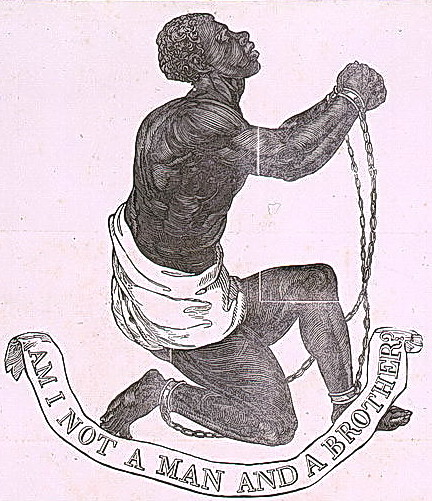
Slavery & Human Trafficking
I. Slavery in the Bible
First, some Biblical background. In the Bible, slavery is mentioned multiple times, especially in the context of the enslavement of the people of Israel. The Bible addresses how horrible slavery felt to those suffering in it by saying in Exodus 2:23, "The people of Israel groaned because of their slavery and cried out for help." However, the story doesn't end there. The Bible tells us that, "Their cry for rescue from slavery came up to God. And God heard their groaning, and God remembered his covenant with Abraham, with Isaac, and with Jacob. God saw the people of Israel--and God knew." (verses 24-25) And God acted by bringing the people out of slavery.
In the New Testament, where slavery was a common practice, the church did not forbid slavery. Rather, speaking to slaves, the Bible said, "Slaves, obey your earthly masters with fear and trembling, with a sincere heart, as you would Christ...rendering service with a good will as to the Lord and not to man." (Eph. 6:5-7) To masters, Paul wrote, "Do the same to [your slaves], and stop your threatening, knowing that He who is both their Master and yours is in heaven." (verse 9) We should keep in mind, though, that slavery was legal back then and that the early church tried to obey the laws as much as possible, so long as they did not contradict God's law. More important for today may be the verse Micah 6:8, which reads, "He has told you, O man, what is good; and what does the Lord require of you but to do justice, and to love kindness, and to walk humbly with your God?" It is our calling as Christians to fight injustice--including human trafficking--in the world today.
But let's dig a little deeper into Scripture. The Bible also refers to slavery in a deeper spiritual sense. Romans 6:17-18 and 22 reads, "But thanks be to God, that you who were once slaves of sin ... and, having been set free from sin, have become slaves of righteousness. ... But now that you have been set free from sin and have become slaves of God, the fruit you get leads to sanctification and its end, eternal life." While we know that physical slavery is a horrible injustice, we must remember that as Christians there is an even greater issue: the slavery of people's hearts to sin.
II. Slavery Today
Now let's fast-forward two thousand years to slavery in today's world. For some background, I'd like to quote from the information found on International Justice Mission (IJM)'s website.
Forced labor slavery is the use of deception, threats or violence to compel someone to labor without pay or for no pay beyond the substance necessary to continue the labor. It is called by many names, including debt bondage and forced labor, and is a form of modern slavery.
Modern-day slaves face brutal conditions in rock quarries, rice mills, brick kilns, fisheries, garment factories and many other industries around the world. Victims of slavery are often deprived of the freedom of movement, unable to leave the facility where they are forced to work and unable to seek employment elsewhere. Forced laborers are also often victims of violent physical and sexual abuse.
Debt bondage is a common method used to entrap victims of slavery. In this illegal scheme, an employer offers a small loan (often as low as $25) to a laborer, with the understanding that the loan will be repaid through work at the owner’s facility. The owner then ensures this repayment is impossible by refusing to pay the employee and inflating the loan through exorbitant interest rates, false charges, and denying requests for information on the status of the loan. The laborer is forbidden to leave the work facility until the loan is “repaid” in full—despite the fact that the work already completed by the laborer should have fulfilled any obligation to the owner long ago. The employer becomes the laborer’s owner—and the loan’s conditions are often extended to relatives of the victim, including children, who are forced to work off a false and ever-growing debt.
THE FACTS
-
There are an estimated 27 million slaves in the world today—more than any other time
in history.
-
Children below the age of 18 years represent an estimated 26% of all forced labor victims.
-
In a wide-reaching survey conducted by the United Nations Office on Drugs and Crime,
approximately 40% of countries had not registered a single conviction against perpetrators
of trafficking and slavery, which is crucial for deterrence.
III. Slavery in Fantasy
So, now that we've got that information under our belts, what can we do? Besides donating our time and resources to supporting ministries like IJM, we can harness our writing as a tool for change. How?
First and foremost, you can mention the issue of slavery or human trafficking in your story. Even just mentioning it will raise awareness of the issue. Getting the problem out in the open is crucial to eventually affecting change in our world. It doesn't have to be a major theme in your story, but knowing that the problem exists in the background could make a world of difference.
Second, if your story allows it, you can describe and show the suffering caused by slavery through the lives of one or more of your main characters. Mentioning the problem of slavery is all very well, but it's only when people realize that slavery is a problem--an unjust, painful, hideous problem--that people will start to think about what they can do to change it. As writers, one of our best tools is making something come alive to our readers. What better way to use that skill than to make the pain of slavery visible and tangible to readers, making them realize that not only slavery exists, but it must be changed!
Finally, if your story permits, you can even propose solutions to slavery through your story. Perhaps the talking eagles in your fantasy world are enslaved, but your main characters, a group of fearsome magical mice, wage a war to free the eagles. Or maybe your characters recruit freed slaves to join the fight against the evil dark lord. Maybe your main character, a former slave, returns to the place where she was kept as a slave in order to rescue her family or friends. The possibilities are as wide as your imagination; through these and other ways, you can use your story to propose solutions to slavery.
As always, do keep in mind that your story is not a sermon. Your story is life contained in words on the page. Never try to force your story into a message; instead, allow the flow of the words and the lives in the story to allow your message to shine through.
Now tell me: can you recommend any good books that tackle this problem? Have you ever tried to write about slavery? Do you have any suggestions or things to add to what I've mentioned above? Any resources about slavery in the Bible? Please comment and let us know!
(By the way, if you haven't had a chance to yet, I'd really recommend checking out IJM and getting involved in the fight against modern slavery.)
Friday, March 22, 2013
Bullying
Last week, I started a new series on tough issues in our world that we as fantasy writers can--even should--confront in our fantasy stories. If you missed out on my post last week, I highly suggest that you read it here. In today's post, I'll be talking about another extremely serious issue: bullying.
Most of us have had experiences with bullying before, especially as children. Now a few points, first, about bullies. According to many studies, bullies are often insecure people who tear others down in order to make themselves feel better. Bullies are not automatically "evil." Rather, they are often motivated by envy or resentment and may think that bullying is the only way they are esteemed, valued, or noticed. In terms of personality types, bullies are usually authoritarian/dominant personalities that enjoy controlling others, especially those against whom they are prejudiced.
With that information under our belts, let's turn to bullying itself. Bullying refers to some form of coercion or belittlement, whether emotional, verbal, or physical. Bullying often happens in the presence of a crowd of uninvolved bystanders, which adds to the victim's sense of humiliation. Bullying involves hurting someone through some sort of abusive language or behavior, usually intentionally. In some instances, casual or flippant words may have the same effect as bullying, even if they were not intended spitefully. Some common forms of bullying are name-calling, exclusion from events, verbal or written abuse, and physical violence.
Those who are victims of bullying often suffer the effects of bullying all their life. They typically feel belittled, and sometimes take that out on others by becoming aggressive or bullying themselves. Victims often feel lonely, depressed, and suffer from very low self-esteem. If you have had any experiences being bullied, you will remember the feeling of humiliation and misery as a result. It should come as no surprise, then, that those who are bullied also suffer from increased risk of suicide.
Bullying is a huge issue in our world, and can be found in as many different environments as there are people: school, the workplace, clubs and activities, on the Internet, and more.
Now, how can we translate this issue to our own fantasy worlds? The opportunities are nearly endless. Even fantasy races can participate in bullying, whether as bullies, bystanders, or victims. The psychological consequences of being bullied can add layers of meaning to certain characters in your story. You could include bullying as a backstory for a character, or you could make a character who has to stand up to bullying over the course of your novel.
One thing that I'd like to encourage here is that we, both as people and as writers, should have compassion on everyone involved in bullying. Of course we should condemn bullying wholeheartedly. However, we can also recognize that bullies and bystanders might sometimes deserve some compassion because of the things that are out of control in their lives (although that's not to say we should support their responses). Keep in mind the fact that everyone is hurt by bullying. Look for ways to translate bullying in your story into more complex situations with the potential for redemption.
Let me know what you think. Have you ever written a story in which someone is bullied? Do any of your "bad guys" show signs of being bullies? Have you read stories that dealt with this issue? (Note: If you're interested in finding out more information about bullying, I'd start with Wikipedia's overview here and the US government's stop bullying site here.)
Most of us have had experiences with bullying before, especially as children. Now a few points, first, about bullies. According to many studies, bullies are often insecure people who tear others down in order to make themselves feel better. Bullies are not automatically "evil." Rather, they are often motivated by envy or resentment and may think that bullying is the only way they are esteemed, valued, or noticed. In terms of personality types, bullies are usually authoritarian/dominant personalities that enjoy controlling others, especially those against whom they are prejudiced.
With that information under our belts, let's turn to bullying itself. Bullying refers to some form of coercion or belittlement, whether emotional, verbal, or physical. Bullying often happens in the presence of a crowd of uninvolved bystanders, which adds to the victim's sense of humiliation. Bullying involves hurting someone through some sort of abusive language or behavior, usually intentionally. In some instances, casual or flippant words may have the same effect as bullying, even if they were not intended spitefully. Some common forms of bullying are name-calling, exclusion from events, verbal or written abuse, and physical violence.
Those who are victims of bullying often suffer the effects of bullying all their life. They typically feel belittled, and sometimes take that out on others by becoming aggressive or bullying themselves. Victims often feel lonely, depressed, and suffer from very low self-esteem. If you have had any experiences being bullied, you will remember the feeling of humiliation and misery as a result. It should come as no surprise, then, that those who are bullied also suffer from increased risk of suicide.
Bullying is a huge issue in our world, and can be found in as many different environments as there are people: school, the workplace, clubs and activities, on the Internet, and more.
Now, how can we translate this issue to our own fantasy worlds? The opportunities are nearly endless. Even fantasy races can participate in bullying, whether as bullies, bystanders, or victims. The psychological consequences of being bullied can add layers of meaning to certain characters in your story. You could include bullying as a backstory for a character, or you could make a character who has to stand up to bullying over the course of your novel.
One thing that I'd like to encourage here is that we, both as people and as writers, should have compassion on everyone involved in bullying. Of course we should condemn bullying wholeheartedly. However, we can also recognize that bullies and bystanders might sometimes deserve some compassion because of the things that are out of control in their lives (although that's not to say we should support their responses). Keep in mind the fact that everyone is hurt by bullying. Look for ways to translate bullying in your story into more complex situations with the potential for redemption.
Let me know what you think. Have you ever written a story in which someone is bullied? Do any of your "bad guys" show signs of being bullies? Have you read stories that dealt with this issue? (Note: If you're interested in finding out more information about bullying, I'd start with Wikipedia's overview here and the US government's stop bullying site here.)
Subscribe to:
Posts (Atom)