Monday, August 18, 2014

Best Gifts for Writers

I'm on holiday right now traveling through Europe, so I won't write out a whole post about ruined castles or ancient works of art just yet. Instead, I thought I might provide some links to a few delightful fantasy or writing-related objects I've found recently. These would make excellent birthday gifts or purchases for yourself. Enjoy!

Fandom Teas: Discover teas from Sherlock to Harry Potter to Doctor Who! They don't have tons of options, but still, I can't say no to sampling a few of these!

Trevillion Images: These are high quality professional images that are usually quite beautiful and atmospheric and would make perfect book cover elements. There are sections for historical fiction and fantasy that contain some amazing work. If you're looking to purchase images for a book cover, then look no further. This is really the best of the best. Do note that it has high prices to match the high quality!

10 of the Greatest Essays on Writing: For whenever you need a bit of motivation or wisdom. The article links to either the full text or excerpts from each of the essays. Wise words for a rainy afternoon or a lazy summer day.

Also you could always give beautiful journals -- writers will never refuse a lovely notebook, especially if it's leatherbound with gold leaf pages!

A fancy pen such as a fountain pen works well, too. Writers need good equipment.

And, of course, books of every shape and size. A gift card to a bookstore works well, but a trip to a used bookstore with shelves piled high with beautiful books is even better!

If you're short on change, consider giving them the gift of time. Offer to wash the dishes every evening for a week, or doing the household cleaning on Saturday mornings so the author can use that time to write.

One of the most meaningful gifts writers can receive is a special piece of original writing--a lovely poem with special meaning, or a notebook full of special things that the giver noticed about the receiver, or a list of blessings or prayers for the receiver. It's even better if it's illustrated!

Finally, you could give a magazine subscription to Writer's Digest or an inspiration-filled magazine such as National Geographic. To me, a magazine subscription represents prosperity and success. Receiving a magazine is like receiving a letter from the President. It's interesting to look at, read, even touch and smell. Definitely a wonderful gift idea! Plus, it's actually quite cheap--typically $20 for a year's subscription.


So there's a start of ideas for what to buy yourself or give to fellow writers! Now, tell me: what's the best writing-related gift you've ever received? Given? Or what would you like to get?


Photo by JD Hancock, Ever Present

Wednesday, July 23, 2014

Book Review: Dealing with Dragons

I realized after my most recent blog post that, while I've mentioned Patricia C. Wrede's Enchanted Forest Chronicles in glowing terms repeatedly over the lifetime of this blog, I've never properly reviewed them. And, since they are hilarious cliche-breaking books that I believe every fantasy writer should read, I'll go ahead and review them now.

The Enchanted Forest Chronicles are a four-book series, and although the last two are all right, the first two are the best. My favorite of all of them is definitely the first one, Dealing with Dragons, so that's the book that I'll review here.


Title: Dealing with Dragons
Author: Patricia C. Wrede

Page count: 240 pages

Stars: 5 stars, All-Time-Favorite
  • 5 = an amazing book that delivers a punch. Read this!  

Teaser: Cimorene is not a traditional princess. She's tall with black hair rather than dainty with golden tresses, she learns to fence instead of dance, she's bored sick at the castle, and she definitely doesn't want to marry a prince. Instead, she runs away to volunteer her services to a dragon. The rest of the story is a hilarious series of adventures and misadventures in which Cimorene deals with confused knights, stone princes, dangerous wizards, a cat-loving witch, quarrelsome dragons, and lots of soap.


Age level: Preteens and up (younger children would probably enjoy it, but they might not be able to appreciate the sarcasm and satiric humor)

Violence:
  • 1 = mild injuries appropriate for all ages
Romance:
  • 1 = a hint of romance (the second book contains slightly more romance, or a 2 rating on my scale)
Language:
  • 0 = none (there may have been some humorous exclamation at some point along the lines of "leaping lizards" but I don't recall exactly)

Christian worldview: There's no religious content, but it's written in the tradition of knights-in-shining-armor, that is, with chivalry and respect towards ladies. Definitely nothing anti-Christian, unless you're opposed to magic occurring in a fantasy world.

My thoughts: Have you ever wanted to read a book that took the conventions of fantasy stories--frog princes, princesses held captive by dragons, and knights in shining armor--and turned them on their head? Well, search no further: Dealing with Dragons is the best fantasy satire I've ever read. I love this book so much that I bought it for my younger sister for a birthday present years ago!

If you need convincing, just take a look at the chapter titles. "Chapter 2: In which Cimorene Discovers the Value of Classical Education and Has Some Visitors," "Chapter 5: In which Cimorene Receives a Formal Call from Her Companions in Dire Captivity," and "Chapter 14: In which [some bad guys] Try to Make Trouble, and Cimorene Does Something about It."

I'll leave you with this sorrowful monologue from a sad prince that Cimorene befriends: "It's been three years since I graduated, and everyone's still waiting for me to do something spectacular," the stone prince said, lengthening his stride. "The rest of my classmates are already making names for themselves. George started killing dragons right away, and Art went straight home and pulled some sort of magic sword out of a rock. Even the ones nobody expected to amount to much have done something. All Jack wanted to do was go back to his mother's farm and raise beans, and he ended up stealing a magic harp and killing a giant and all sorts of things. I'm the only one who hasn't succeeded."


So don't miss this book, really! It's a hilarious story that everyone should read and enjoy.

Wednesday, July 16, 2014

A Few of my Favorite Fantasy Cliches

This is my 100th post! In celebration, I'd like to do something very cliche: write a post about my favorite fantasy cliches. (Cue applause.)

Also, please note that in my blog post, I've used male pronouns to refer to characters, since the majority of fantasy stories are still written about males. Hopefully someday the case will be different!

So, without further ado, I present:


My Favorite Cliches
To the tune of, "My Favorite Things"

Dark stormy nights and scales on dragons
Bright shining daggers and red glowing fire
Stacks of old parchment all tied up with strings--
These are a few of my favorite cliches.

Black or white horses and elvish lembas bread
Watch bells and beacons and Gollum with worms
Creatures that fly with the Nazgul on their wings--
These are a few of my favorite cliches.

Shield maidens in white dresses with swords at their sashes,
Arrows that barely scratch my nose and eyelashes
Silver white beards of wise old men who soon die--
These are a few of my favorite cliches.

When the Dark Lord rises, when the prophecy rhymes, when the hero's an orphan,
I simply remember my favorite cliches, and then I don't feel so bad (about my own writing)!


And now for a proper list of my favorite fantasy cliches.

1. Stock characters

Almost every single fantasy story contains an old man/wizard/wise person who imparts crucial information to the young hero, usually an orphan. Said young hero discovers he has magic powers or is the "chosen one," a fact that no one has told him all his life, and that the villains have only just discovered. Add in a handful of warrior maidens and a dragon or two, and you've got a regular soup of cliches. If you really need any examples of this, just look to Lord of the Rings or Harry Potter.


2. Prophecies or curses

Speaking of the "chosen one," any prophecy or curse of any size or shape definitely counts as cliche. Particularly if the hero is the only person that the prophecy could refer to. And if the stakes are "the end of the world as we know it." So if you're dying to make your story as cliche as possible, please, please, insert one of these. I promise it'll increase the cliche-factor by ten. Don't believe me? Ask the dishes! (Reference to Beauty and the Beast, which by the way contains a prophetic curse.)


3. Medieval setting

Despite the constant use of Medieval costumes and weapons in fantasy stories, the hygiene and medicine of fantasy stories seem to be pretty modern. Because, really, where's the plague? Furthermore, there's always a journey that takes days or weeks to get to the destination, usually by walking or riding the same horse for days on end. Honestly, how do characters in these stories manage to get anything done when they must be dead tired from traveling all the time? Walking kills your feet, kills the horses, and can't be done constantly. I'm looking at you, Lord of the Rings.


4. Good versus Evil

So your hero is battling a "Dark Lord" or the "forces of evil" or must go through the "Dark Forest" and battle an army of ugly evil orcs? Wow, how original. But let me ask a question: why should darkness be the enemy just because it's dark? Couldn't that be construed as a bit racist? And why should the whole race of elves (or dwarves, or men) be good and beautiful while orcs (or other villainous force) are always evil and ugly? The real world has good ugly humans and bad beautiful humans. Why should fantasy be any different?


5. Unrealistic fighting

Hero learns swordplay in about a week and is suddenly a master at weapons of any kind, able to confront expert enemies who've had years of training to perfect their technique. Also, arrows never, ever run out, armor is feather-light, and shields are hardly ever necessary. Oh, and while we're on the subject, all wounds seem to be either a minor scratch or life-threatening. Don't heroes ever get paralyzed, or suffer brain damage, or have to amputate their arms?


That said, of course, these particular cliches are only cliches because they've been used very effectively in some of the greatest fantasy stories of all time, from Lord of the Rings to Harry Potter and Beauty and the Beast. So should you really always avoid using cliches?

Well, on the one hand, if you purposefully try to avoid all cliches ever, you're just going to give yourself a horrible headache while you try to think of original plot devices and methods of transportation. On the other hand, you do want to think very carefully before inserting a cliche into your story.

If you do use a cliche, make it humorous and obvious, as Patricia C. Wrede does in her hilarious Enchanted Forest Chronicles. Or try turning it on its head, as Gail Carson Levine did in her amazing novel Ella Enchanted. Recognize the cliches in your writing--and run with them! Use them for your own benefit. It's the best way to write!


Have you read any books or seen any movies with cliches? Any cliche-breaking stories you'd love to share? What about in your own writing--love them? Hate them? Avoid them like the plague?

Friday, July 11, 2014

Book Review: The Phantom Tollbooth

For today's book review, I'm going to review a childhood favorite of mine: The Phantom Tollbooth by Norton Juster. It's such a clever, witty book, along the lines of Alice in Wonderland. If you haven't read it yet, you really must!

Title: The Phantom Tollbooth
Author: Norton Juster

Page count: 272 pages

Stars: 5 stars, All-Time-Favorite
  • 5 = an amazing book that delivers a punch. Read this!  

Teaser
This ingenious fantasy centers around Milo, a bored ten-year-old who comes home to find a large toy tollbooth sitting in his room. Joining forces with a watchdog named Tock, Milo drives through the tollbooth's gates and begins a memorable journey. He meets such characters as the foolish yet lovable Humbug, the Mathemagician, and the not-so-wicked "Which," Faintly Macabre, who gives Milo the "impossible" mission of rescuing the Princesses of Sweet Rhyme and Pure Reason. (Adapted from the Amazon.com description of the 50th Anniversary Edition)

Age level: All ages, although some of the puns and wordplay are subtle enough that it takes years to laugh at everything.

Violence:
  • 1 = mild injuries appropriate for all ages
Romance:
  • 0 = none
Language:
  • 0 = none


Christian worldview: While this isn't a "Christian" book, it certainly isn't anti-Christian in any way. Furthermore, I believe the messages against boredom and of seeing the possibilities in the world around us are important for anyone, Christian or non-Christian.

My thoughts: I don't think I can begin to describe how much I love this story. Perhaps it would be better if I simply let the book speak for itself. So, without further ado, here are just a few of the most hilarious or clever quotes from the book.


"When [Milo] was in school he longed to be out, and when he was out he longed to be in. … Wherever he was he wished he were somewhere else, and when he got there he wondered why he’d bothered. Nothing really interested him—least of all the things that should have."

"I'm the Whether Man, not the Weather Man, for after all it's more important to know whether there will be weather than what the weather will be."

"How are you going to make [the wagon] move? It doesn't have a—”
"Be very quiet," advised the duke, "for it goes without saying.”
And, sure enough, as soon as they were all quite still, it began to move quickly through the streets.

"Whether or not you find your own way, you're bound to find some way. If you happen to find my way, please return it, as it was lost years ago. I imagine by now it's quite rusty."

"Whatever we learn has a purpose and whatever we do affects everything and everyone else, if even in the tiniest way. Why, when a housefly flaps his wings, a breeze goes round the world; when a speck of dust falls to the ground, the entire planet weighs a little more; and when you stamp your foot, the earth moves slightly off its course. … And it's much the same thing with knowledge, for whenever you learn something new, the whole world becomes that much richer."

Friday, July 4, 2014

An Update

It's been a little less than a year since I last posted on this blog. Looking back, I find it rather ironic that the last post I wrote was about "when life gets in the way." Seems my life has been getting in the way of blogging quite a lot this past year.

To be honest, I've been afraid to start blogging again. I feel like I have nothing left to say. My writing projects haven't been focused on fantasy any more, and neither has my reading, so I'm afraid that if I blog about fantasy I'm betraying myself and my readers. I'm left wondering if this whole idea of "Faeire & Faith" is really what I want to be doing.

To put it another way, I am full of doubts about my writing, my self, and the place that Christian fantasy has in my life.

But let's look at it in another way: when are we not full of doubts? When can we ever say with perfect confidence, "This is my ultimate purpose in life and the reason I was placed on this earth; I will not depart from it"?

Life is about so much more than simple certainties. Life is composed of doubts strung together into a narrow, tenuous lifeline clinging to our one anchor: the Cross.


Whew. That felt good to say!

Let me give you a quick update on my current writing and reading projects.

I've written about 60k of a fantasy story about time travel, Vikings, and a magical Ireland. Unfortunately, what I've written so far is about a third to half of the whole story, at least in my imagination. Plus, I keep getting waylaid by fears that my story idea is ridiculous, cliché, unfaithful to Ireland... You know the feeling. More doubts.

So then I started another story, roughly-maybe fantasy, and abandoned it after only about 20k. Don't worry, it wasn't worth saving. I just wrote it to get out the frustrations about story #1 with a new story.

Then I got sick of fantasy, and I decided to write a contemporary romance story set in NYC about a twentysomething writer who gets fired from her job for criticizing her boss and the company. At the threat of a lawsuit, she's forced to do something rather desperate. Honestly, it's just fluff, but it's so entertaining to write that I can't really force myself to give it up! I think I have about 40k written right now.

As far as reading goes...I must admit, I've been sinking deeper and deeper into the world of Jane Austen. Did you know that there are fanfiction and variations for every possible minor Austen character, from Elizabeth Elliot in Persuasion to Charlotte Collins from Pride & Prejudice? Also, Georgette Heyer, another Regency writer, is an amazing author. Hilarious and so subtle! I have to say, some of these stories are so engrossing that it's hard to think about anything other than Regency dresses and chaperones and carriages and...  You get the picture.


So there's an update on my life. What about you? What have you been writing or reading? Has anyone published any books or stories? Also, has anyone struggled with any of these doubts?


Image courtesy of Flickr.com Creative Commons. "The Path" by GabPRR.

<script async src="//pagead2.googlesyndication.com/pagead/js/adsbygoogle.js"></script>
<!-- siennanorth_sidebar-right-1_AdSense1_160x600_as -->
<ins class="adsbygoogle"
     style="display:inline-block;width:160px;height:600px"
     data-ad-client="ca-pub-7142896568276191"
     data-ad-slot="1405513669"></ins>
<script>
(adsbygoogle = window.adsbygoogle || []).push({});
</script>

Wednesday, July 17, 2013

When Life Gets in the Way: An Exercise in Courage


There are times in life when the projects you’re working on simply grind to a halt. The past two months have been such for me. As you’ve no doubt noticed, I’ve neglected blogging for more Saturdays than I care to count. I do have an excuse: two cross-continental moves between Asia and Europe, then Europe and North America, made me rather busy. That’s not to mention living out of a suitcase as well as fitting in sight-seeing in Europe and seeing friends and family in America. However, the point of the matter is that I have not been writing or blogging during this time. How can I ever find the courage to start back again?

You see, it takes courage to begin anew when you’ve neglected to work on something for a long while. Your conscience may start to bug you and you think, “I really should start to work on a new blog post…” but then things happen, and life gets in the way, and you don’t take the time to get started. In fact, it can be easier to push the projects aside and ignore that small voice in your head after a while. Soon it’ll be one month, then two, then three since you’ve written anything.

What’s a struggling sometimes-writer to do?

Here are some tips that I’ve found helpful for times like now when my writing has ground to a halt.
  • Discover what made you stop in the first place: Were you bored by your story? Was your life just “too busy” for writing? Did the genre of story not appeal to you any more? Did you get five or fifteen new ideas and couldn’t decide which one to work on? Did work/school become too urgent and time-consuming? Whatever your problem was, by identifying it, you make it easier to avoid the problem this time. Think back to the last time you wrote and the circumstances surrounding it, and see if you can think of what made your writing slow down.
  • Schedule time to write: there are always moments in the day in which you don’t have anything urgent or important to do. First pinpoint those times—maybe fifteen minutes after breakfast, half an hour before lunch, or an hour late at night. Then schedule some time to write then. The more intentional you are, and the more a part of your routine you make your writing, the easier it will be to start afresh.
  • Remember, the first time is the hardest: Any writer will know that beginning a story, a blank page, a fresh piece of paper, can be an intimidating challenge. But you have to start somewhere. Write one word, then another, and pretty soon you’ll discover that the most difficult part was starting. (Although finishing a project can be just as tricky…but that’s a subject for another post.)
  • Above all, don’t give up: It’s never too late to start writing again. Never fool yourself into thinking that you’re a horrible writer who will never finish anything and nobody wants to read your work. I want to assure you that every single person has a worthwhile story to tell. Whether or not that story is the one you’re working on now, you can be assured that you are adding something of value to the world. You can even find yourself a team of fellow writers or encouragers to keep you going and remind you that what you’re writing is significant. Just don’t give up!


So here I am, concluding the first blog post I’ve written in over a month. It’s been difficult to write, but I hope that these tips on courage help you just as much as they’ve helped me. Enjoy writing!


Sunday, June 2, 2013

Creating Fantasy Languages


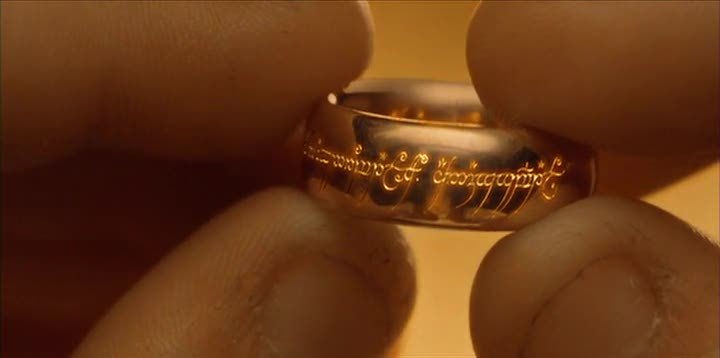
One of the most interesting aspects of fantasy works is the fact that they take place in worlds of their own, with the potential for entirely new life-forms, cultures, and languages. A few fantasy authors have capitalized on this unique opportunity by going so far as to create their own language(s) to populate their fantasy world. Of course, J.R.R. Tolkien stands as an eminent example of such a practice.

In today’s blog post, I’d like to examine first of all whether it’s worthwhile to create a language/languages for your world, and second of all provide you with some resources in case you are interested in creating languages. So, without further ado, let’s begin.

Pros:
  • Languages provide depth: There’s nothing that proclaims the hard work and seriousness of your story than a language. Adding a unique fantasy language adds an immediate dose of credibility to your story that your readers may enjoy.
  • Languages add believability to characters and settings: Languages can be invaluable tools for developing various unique civilizations and cultures in your story. Also, individual characters may be better described and recognized based on the language(s) that they speak.
  • Languages can be fun to create: This one’s pretty self-explanatory—languages are a fun break from the grind of churning out a rough draft or meticulously editing your manuscript. Just don’t get so caught up in languages that you neglect the story itself!
  • Languages are important biblically: The account of the tower of Babel tells of a time in which everyone spoke one language and “nothing that they propose to do will now be impossible for them.” (Gen 11:6) Recognizing the power of language, God created different languages, causing people to be scattered and divided throughout the earth. In short, languages have power biblically. Don’t underestimate this power in your story!


Cons:
  • Languages are time-consuming to create: It takes a lot of effort and time to come up with a unique language, especially if you use a distinct alphabet. Tolkien himself began the work of creating his elvish languages in his teen years, and the project was still in progress in his forties. Be aware that this isn’t a project to take lightly!
  • Languages don’t advance the plot and rarely help to create better characters: While languages do have some role in the story as part of the setting, they are not usually instrumental to the progress of the plot itself. They also don’t usually add to the believability of characters, since other elements—such as their likes, their dislikes, and their interests—are more essential to readers’ knowledge of characters. So don’t let languages become too much of a priority.
  • Languages require explanation and can distract from the overall story: Let’s be honest here—foreign languages slow the action down. They should be used sparingly, if at all. Be sure to weigh the benefit of adding depth to the cost of slowing down the story before you insert any languages into the story!


With that analysis behind us, let me point you to some resources in case you would be interested in creating languages.

The Language Construction Kit: a very helpful resource for those trying to create an artificial language. You can use the resources in as much or as little depth as you wish.

Language Creation Society: if you’re really serious about creating a language, they have some helpful resources on their website. Be warned—it’s not for the faint of heart!

Discussion Thread on Creating Phonetic Systems: You may have heard me mention the HolyWorlds forums once or twice on this blog. That’s because they contain many, many helpful discussions on topics relevant to Christian fantasy writers—including this particular easy-to-understand guide to creating languages and phonetic systems.

Article on How Language Affects Behavior: this article by Stanford researcher Lera Boroditsky highlights examples of how the language you speak affects how you see the world and how you behave. Although it’s not directly related to creating languages, it is very fascinating to skim if you have a few minutes to spare.


And that brings us to the end of today’s post. Now it’s your turn: have you ever tried inventing a language? How did it go? Any advice on how to include languages in your fantasy story?